
Uterine Fibroids: Symptoms & Treatment
If you’ve been living with heavy periods, pelvic pain, or frequent urination – and assuming it’s just “normal” – you’re not alone. Many women dismiss these symptoms for years.
At Blossom Women Wellness Clinic, we see this every day. But here’s what you need to know: these symptoms can indicate uterine fibroids, one of the most common gynecological conditions affecting women during their reproductive years.
The good news? Fibroids are non-cancerous (benign) growths, and many can be managed effectively with modern medical treatments. Early diagnosis means getting the right treatment before symptoms affect your quality of life.
What uterine fibroids actually are
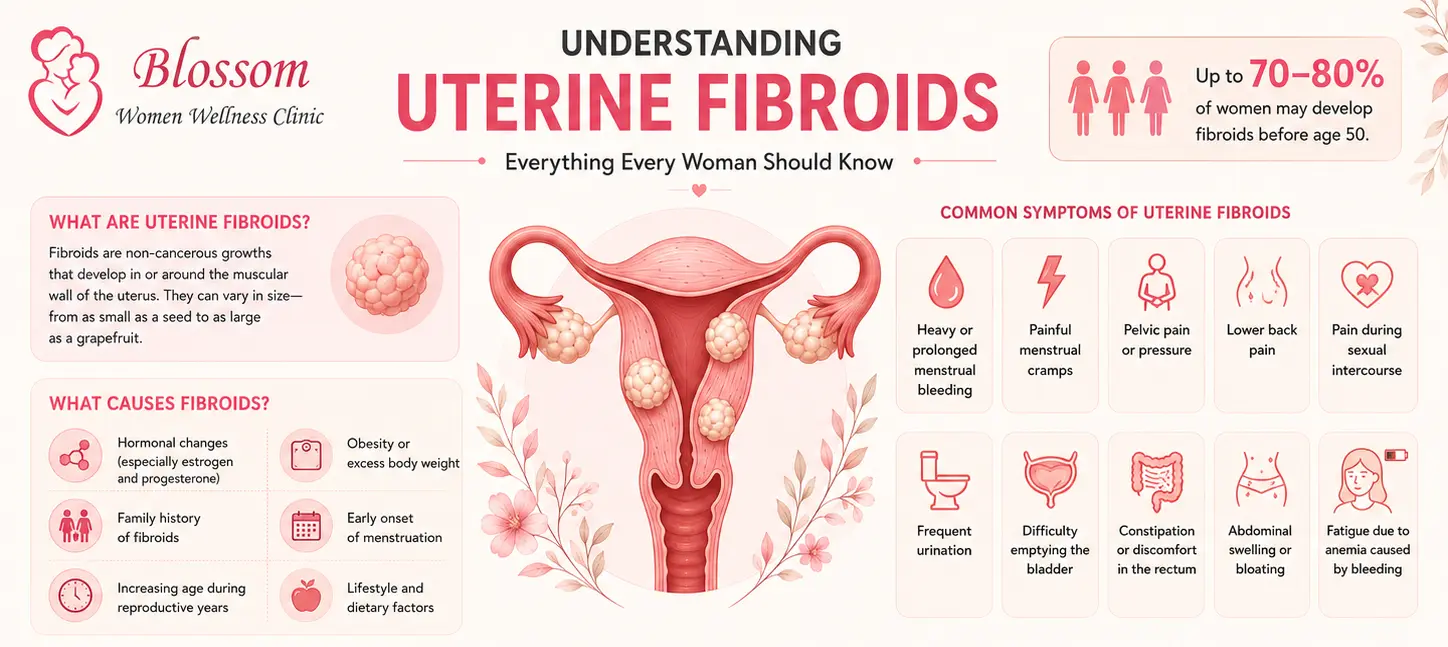
Uterine fibroids (also called leiomyomas or myomas) are non-cancerous growths that develop in or around the muscular wall of the uterus. They can vary greatly in size—from as small as a seed to as large as a grapefruit.
Studies suggest that up to 70–80% of women may develop fibroids by the age of 50, although many never experience noticeable symptoms.
What causes fibroids?
The exact cause isn’t completely understood, but several factors increase the likelihood of developing fibroids:
- Hormonal changes (especially estrogen and progesterone)
- Family history of fibroids
- Increasing age during reproductive years
- Obesity or excess body weight
- Early onset of menstruation
- Lifestyle and dietary factors
Having one or more risk factors doesn’t mean you’ll develop fibroids – but regular gynecological check-ups help with early detection.
Common symptoms to watch for
Many women have fibroids without any symptoms. However, depending on their size and location, fibroids may cause:
- Heavy or prolonged menstrual bleeding
- Painful menstrual cramps
- Pelvic pain or pressure
- Lower back pain
- Pain during sexual intercourse
- Frequent urination
- Difficulty emptying the bladder
- Constipation or discomfort in the rectum
- Abdominal swelling or bloating
- Fatigue due to anemia caused by excessive bleeding
If these symptoms interfere with your daily life, consult a gynecologist promptly.
Different types of fibroids
Fibroids are classified based on where they grow:
Intramural Fibroids – Develop within the muscular wall of the uterus and are the most common type.
Submucosal Fibroids – Grow beneath the uterine lining and often cause heavy menstrual bleeding.
Subserosal Fibroids – Develop on the outer surface of the uterus and may press against nearby organs.
Pedunculated Fibroids – Attached to the uterus by a thin stalk and may grow either inside or outside the uterus.
How we diagnose fibroids
Your gynecologist may recommend:
- Pelvic examination
- Ultrasound scan
- Transvaginal ultrasound
- MRI (for complex or larger fibroids)
- Hysteroscopy (when evaluating fibroids inside the uterus)
- Blood tests to check for anemia
Early diagnosis helps determine the best treatment approach.
Treatment options that work for you
Treatment depends on size and number of fibroids, symptoms, age, future pregnancy plans, and overall health. We always personalize the approach.
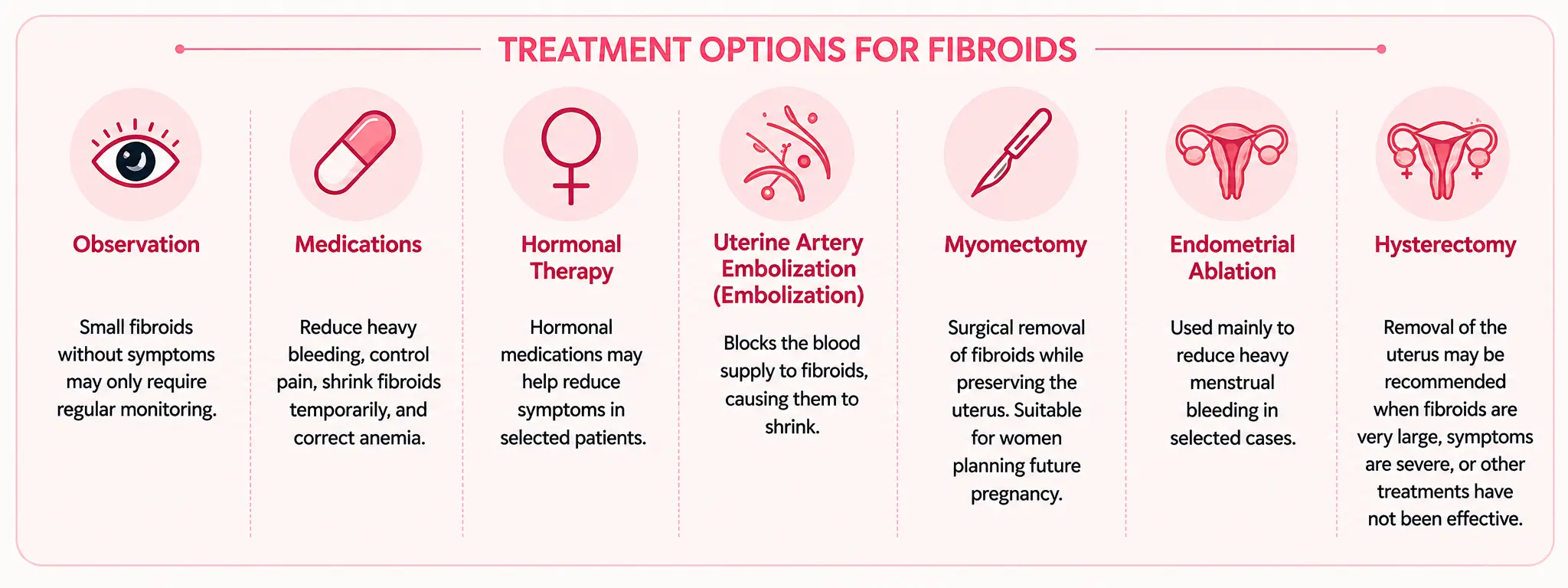
Observation – Small fibroids without symptoms may only require regular monitoring.
Medications – We may prescribe medicines to reduce heavy bleeding, control pain, shrink fibroids temporarily, or correct anemia.
Hormonal Therapy – Hormonal medications may help reduce symptoms in selected patients.
Uterine Artery Embolization – A minimally invasive procedure that blocks the blood supply to fibroids, causing them to shrink.
Myomectomy – Surgical removal of fibroids while preserving the uterus. This option is often considered for women planning future pregnancies.
Endometrial Ablation – Used mainly to reduce heavy menstrual bleeding in selected cases.
Hysterectomy – Removal of the uterus may be recommended when fibroids are very large, symptoms are severe, or other treatments have not been effective.
What about fertility?
Not all fibroids interfere with fertility. However, depending on their size and location, some fibroids may:
- Make conception more difficult
- Increase the risk of miscarriage
- Affect embryo implantation
- Cause pregnancy complications
Women planning pregnancy should discuss treatment options with their gynecologist – we can help assess your individual situation and create a plan that supports your family goals.
Can fibroids be prevented?
There’s no guaranteed way to prevent fibroids, but maintaining overall reproductive health may reduce certain risks:
- Maintain a healthy body weight
- Exercise regularly
- Eat a balanced diet rich in fruits and vegetables
- Manage chronic medical conditions
- Schedule regular gynecological examinations
When should you see a gynecologist?
Seek medical advice if you experience:
- Heavy menstrual bleeding every month
- Bleeding lasting longer than a week
- Severe pelvic pain
- Persistent lower back pain
- Pain during intercourse
- Frequent urination without infection
- Difficulty becoming pregnant
- Rapid abdominal enlargement
Early treatment often provides better outcomes and may prevent complications.
You don’t have to live with heavy periods and pelvic pain. Timely evaluation can identify the cause and allow treatment before symptoms worsen.
If you’re experiencing symptoms suggestive of uterine fibroids, consult an experienced gynecologist for a comprehensive evaluation and personalized treatment plan.
This article is general health education, not personalised medical advice. For guidance specific to your case, book a consultation on +91 99280 70006 or message on WhatsApp.