Pregnancy & Maternity

Pregnancy Do’s and Don’ts Guide
31 Jul 2026 · Dr. Sunita Choudhary

Pregnancy Do’s and Don’ts Guide
TL;DR Healthy pregnancy habits come down to the basics done consistently: attend prenatal appointments even when you feel well, take folic acid and prescribed supplements, eat a balanced diet, stay active within limits, and avoid alcohol, smoking and unapproved medicines. Don’t skip visits just because you feel fine, some complications show no early symptoms. Every pregnancy differs, so adjust this guidance with your obstetrician.

Pregnancy is a period of major physical and emotional change. Healthy habits, regular medical care and avoiding harmful substances can support the wellbeing of both mother and baby. The recommendations below provide general guidance. Every pregnancy is different, so advice may need to be adjusted for conditions such as high blood pressure, diabetes, thyroid disease, anaemia, placenta-related concerns or a history of pregnancy complications.

Medical disclaimer: This article is for general education and does not replace personalised advice from your obstetrician.

Do’s During Pregnancy
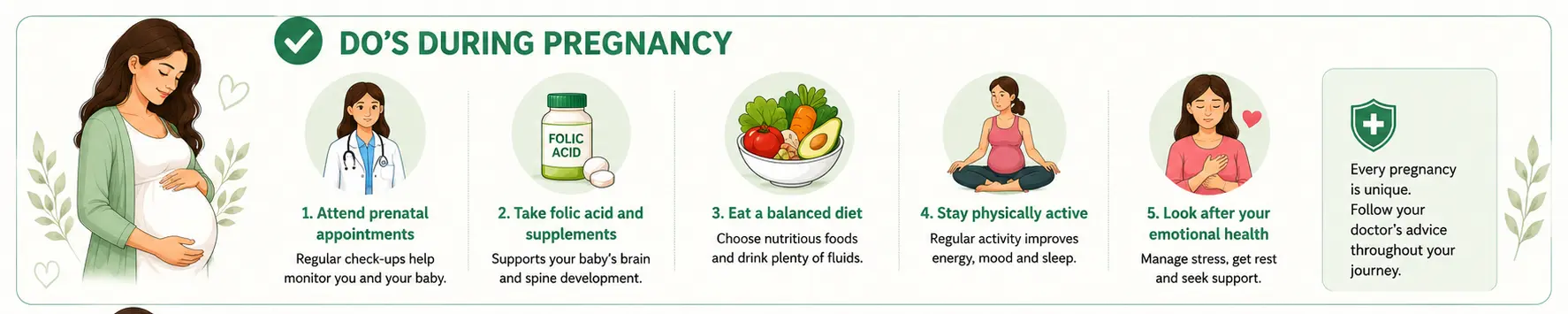
Healthy choices during pregnancy including nutritious food, prenatal vitamins and regular exercise

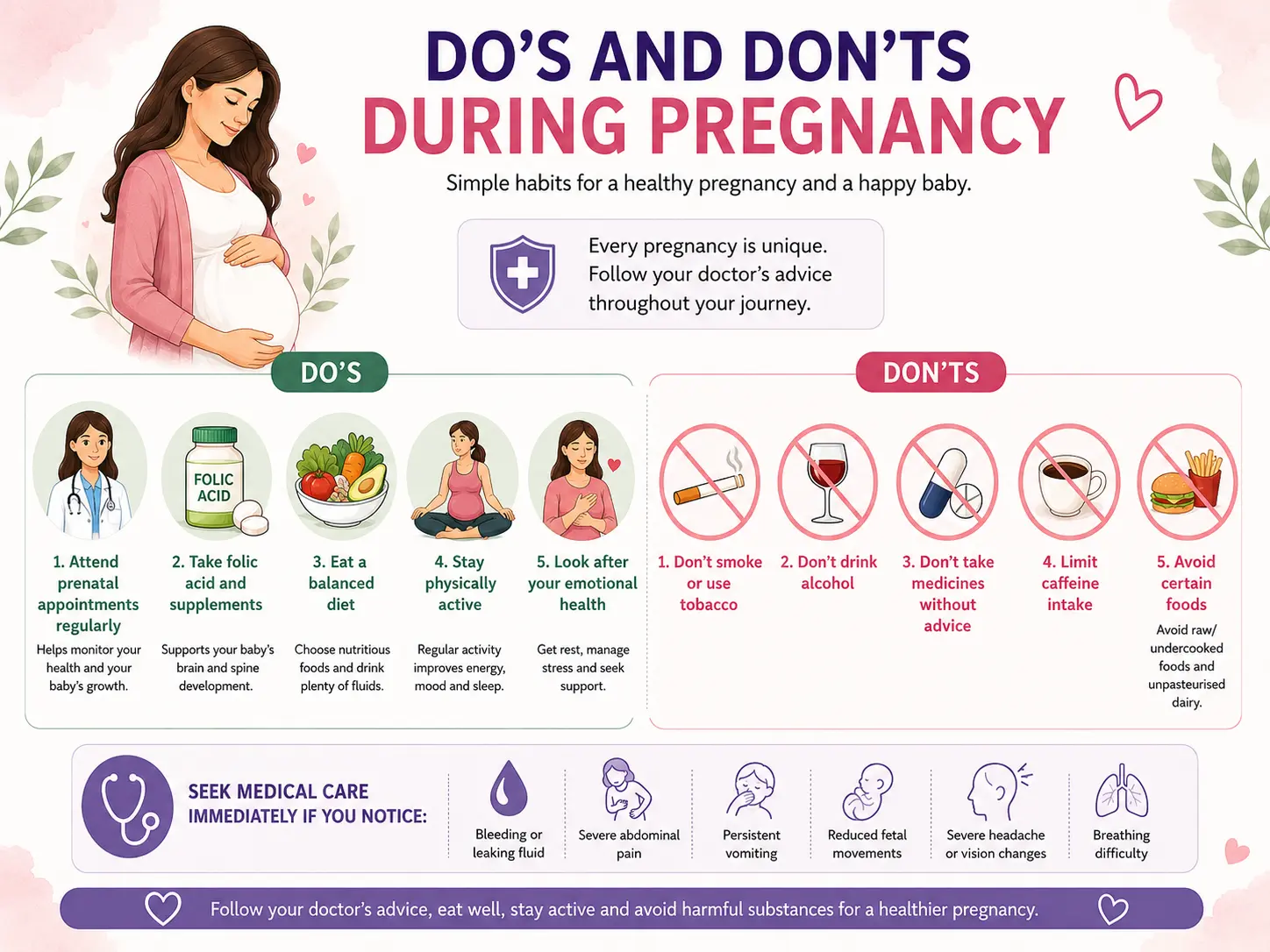
1. Attend your prenatal appointments regularly

Regular antenatal visits allow your doctor to monitor your health and your baby’s development. Depending on the stage and circumstances of the pregnancy, visits may include blood-pressure and weight checks, blood and urine tests, ultrasound examinations, monitoring the baby’s growth, screening for gestational diabetes and anaemia, and discussion of medicines, supplements and vaccinations.

Do not skip appointments simply because you feel well. Some pregnancy complications may initially cause few or no noticeable symptoms.

Contact your doctor earlier than scheduled if you experience bleeding, leaking fluid, severe abdominal pain, persistent vomiting, reduced fetal movements, severe headache, vision changes, breathing difficulty or sudden swelling.

2. Take folic acid and prescribed prenatal supplements

Folic acid supports the early development of the baby’s brain and spine. Adequate folic acid before conception and during early pregnancy helps reduce the risk of neural-tube defects. The CDC advises people who can become pregnant to obtain 400 micrograms of folic acid daily, although an obstetrician may prescribe a different amount according to individual risk factors.

Your doctor may also recommend iron, calcium, vitamin D or other supplements based on your diet, blood-test results and stage of pregnancy.

Do not double a missed dose or begin additional herbal or nutritional supplements without medical advice.

3. Eat a balanced, nutritious diet

A healthy pregnancy diet should generally include:

  • Vegetables and fruits
  • Whole grains
  • Pulses, beans and other protein sources
  • Pasteurised dairy products
  • Eggs, fish or properly cooked meat where consumed
  • Healthy fats
  • Adequate fluids

Try to eat regular meals rather than following restrictive diets or the idea that pregnancy requires “eating for two.” Nutritional requirements increase during pregnancy, but appropriate food quantity depends on the trimester, pre-pregnancy weight, activity level and medical needs.

Pregnant women are also more susceptible to certain foodborne infections. Avoid raw or undercooked meat and eggs, unpasteurised dairy products and poorly washed produce, and follow safe-food practices.

4. Remain physically active when medically appropriate

For most healthy women with uncomplicated pregnancies, regular moderate physical activity is safe and beneficial. It can support fitness, sleep, mood, posture and healthy weight gain.

Suitable activities may include:

  • Walking
  • Prenatal yoga
  • Swimming
  • Stationary cycling
  • Light strength exercises
  • Breathing and relaxation exercises

Exercise should be adapted as pregnancy progresses. Avoid activities with a high risk of falling, abdominal trauma, overheating or excessive strain.

Stop exercising and seek advice if you develop bleeding, dizziness, chest pain, painful contractions, fluid leakage, severe breathlessness or reduced fetal movement.

5. Look after your emotional health

Pregnancy can bring happiness as well as uncertainty, anxiety and emotional pressure. Staying positive does not mean ignoring difficult feelings.

Helpful habits may include:

  • Getting adequate sleep
  • Discussing worries with your partner or family
  • Practising meditation or breathing exercises
  • Reducing unnecessary commitments
  • Asking for practical support
  • Speaking openly with your doctor

Persistent sadness, panic, hopelessness, loss of interest, severe anxiety or thoughts of self-harm require prompt professional support.

Don’ts During Pregnancy

Protect mother and baby by avoiding alcohol, smoking and harmful substances during pregnancy

1. Do not smoke or use tobacco

Smoking during pregnancy exposes the baby to harmful chemicals and is associated with serious pregnancy and newborn complications. Second-hand smoke should also be avoided as far as possible.

This includes cigarettes, bidis, hookah, chewing tobacco, vaping and nicotine products.

Do not feel ashamed to ask for help. Your doctor can support you with a safe plan to stop using tobacco.

2. Do not drink alcohol

There is no established safe amount or safe stage for alcohol consumption during pregnancy. Alcohol exposure is associated with miscarriage, preterm birth, stillbirth and fetal alcohol spectrum disorders.

Avoid beer, wine, spirits, cocktails containing alcohol and foods or remedies containing significant alcohol.

A woman who consumed alcohol before learning she was pregnant should stop and discuss the situation honestly with her doctor rather than panic or hide the information.

3. Do not use illegal or non-prescribed drugs

Illegal drugs and the nonmedical use of prescription medicines can harm both the mother and baby.

Do not abruptly stop a prescribed medicine without speaking to the prescribing doctor. Some medicines must be continued, changed gradually or replaced with a safer alternative.

Always inform your obstetrician about:

  • Prescription medicines
  • Over-the-counter medicines
  • Herbal products
  • Ayurvedic preparations
  • Protein powders
  • Weight-loss products
  • Sleep aids
  • Skin and hair supplements

4. Do not let stress go unaddressed

It is unrealistic to expect a completely stress-free pregnancy. The aim should be to recognise and manage stress rather than blame yourself for experiencing it.

Consider seeking support when stress prevents you from sleeping, causes frequent panic or crying, affects eating or daily functioning, or feels impossible to manage alone.

5. Do not consume excessive caffeine

Caffeine is present in coffee, tea, cola, energy drinks, chocolate and some medicines. ACOG advises keeping caffeine consumption below 200 mg per day during pregnancy.

The amount of caffeine varies widely by beverage type, brand, strength and serving size. Energy drinks are best avoided because they may contain high caffeine levels and other stimulants.

Remember that several smaller servings during the day can add up.

Additional Pregnancy Precautions

Review all medicines before taking them

A medicine being available without a prescription does not automatically make it safe during pregnancy. Check before using painkillers, cold medicines, antibiotics, acne treatments or herbal remedies.

Avoid unsafe foods

Take extra care with:

  • Raw or undercooked eggs, fish and meat
  • Unpasteurised milk or dairy products
  • High-mercury fish
  • Liver and excessive vitamin A supplements
  • Unwashed fruits and vegetables
  • Refrigerated foods stored improperly

Stay hydrated

Drink water regularly, particularly during hot weather, exercise or episodes of vomiting. Dark urine, dizziness, a dry mouth and reduced urination may indicate dehydration.

Prioritise sleep and rest

Pregnancy-related tiredness is common. Maintain a regular sleep routine and use pillows for support. Discuss severe snoring, breathing interruptions or persistent insomnia with your doctor.

Maintain dental care

Routine dental care is generally important during pregnancy. Tell your dentist that you are pregnant and seek advice for bleeding gums, tooth pain or signs of infection.

Warning Signs That Need Prompt Medical Attention

Protect mother and baby - seek immediate medical help for these pregnancy warning signs

Contact your maternity-care provider urgently for:

  • Vaginal bleeding
  • Fluid leaking from the vagina
  • Severe or persistent abdominal pain
  • Regular painful contractions before term
  • Reduced or absent fetal movement after movements have become established
  • Severe headache or blurred vision
  • Sudden swelling of the face or hands
  • Chest pain or breathing difficulty
  • High fever
  • Persistent vomiting
  • Fainting or seizures

Emergency symptoms should not wait for the next routine appointment.

The Bottom Line

A healthy pregnancy is supported by regular prenatal care, prescribed folic acid, balanced meals, appropriate physical activity and attention to emotional wellbeing. Smoking, alcohol, illegal drugs and excessive caffeine should be avoided. These recommendations are not intended to make pregnancy stressful or perfection-driven. Focus on safe, sustainable habits and speak with your obstetrician whenever you are uncertain.

Dr. Sunita Choudhary
Senior Consultant, Obstetrics and Gynaecology
Blossom Women Wellness Clinic
Vaishali Nagar, Jaipur

External References

This article is general health education, not personalised medical advice. For guidance specific to your case, book a consultation on +91 99280 70006 or message on WhatsApp.
Keep reading

Related articles

Can I Eat Diwali Sweets if I Have Gestational Diabetes?
Diwali | Gestational Diabetes

Can I Eat Diwali Sweets if I Have Gestational Diabetes?

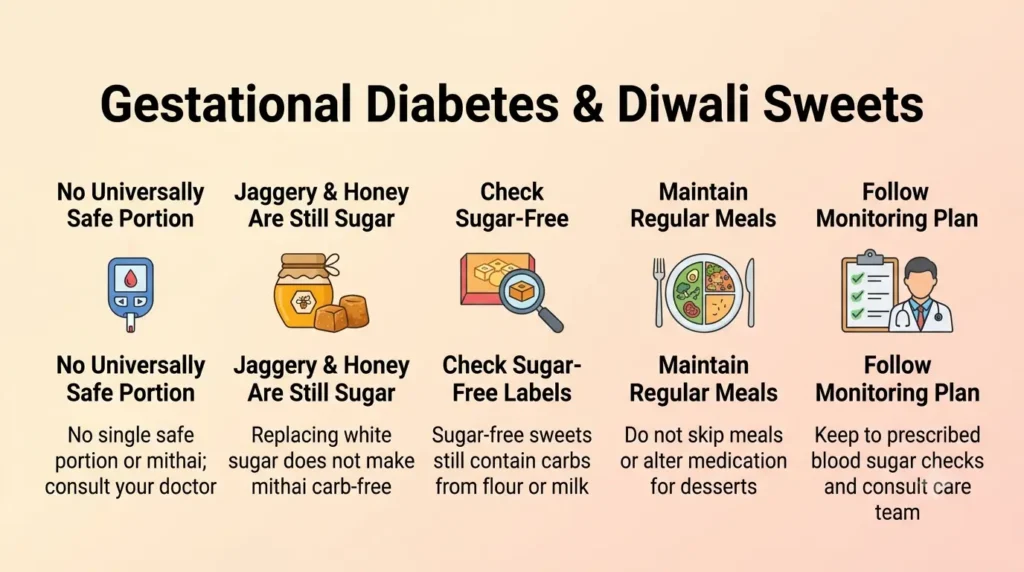
Can you eat Diwali sweets with gestational diabetes? Mithai portions, jaggery vs sugar-free labels, festive meal planning and glucose monitoring — Jaipur.

4 Nov 2026
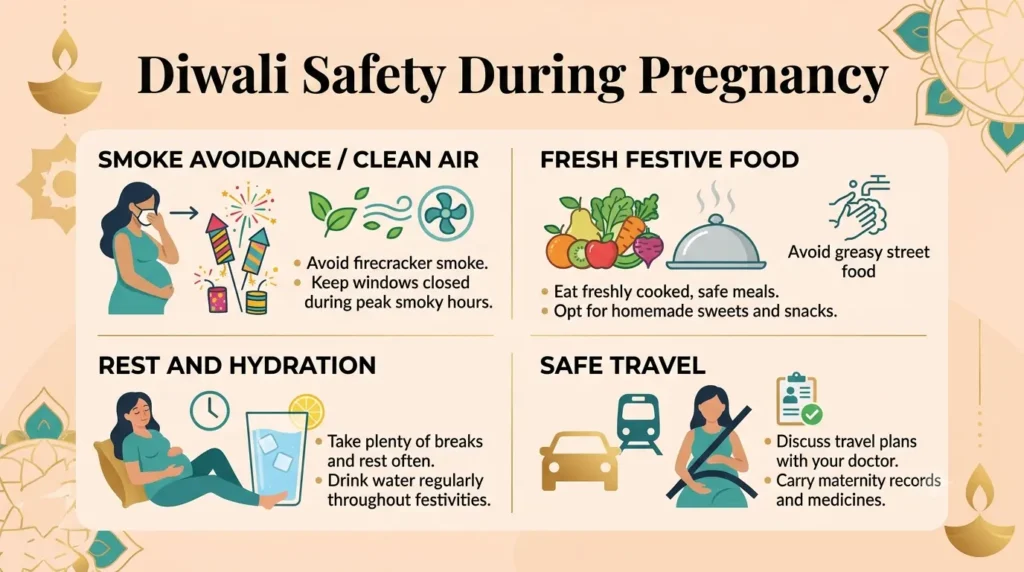
How Can I Celebrate Diwali Safely During Pregnancy?
Diwali | Festival Health

How Can I Celebrate Diwali Safely During Pregnancy?

Learn 10 Diwali safety tips during pregnancy, including firecracker smoke, festive food, travel and rest. Expert guidance from Dr. Sunita Choudhary, Jaipur.

3 Nov 2026
Early Pregnancy Symptoms: Week by Week
Early Pregnancy | First Trimester

Early Pregnancy Symptoms: Week by Week

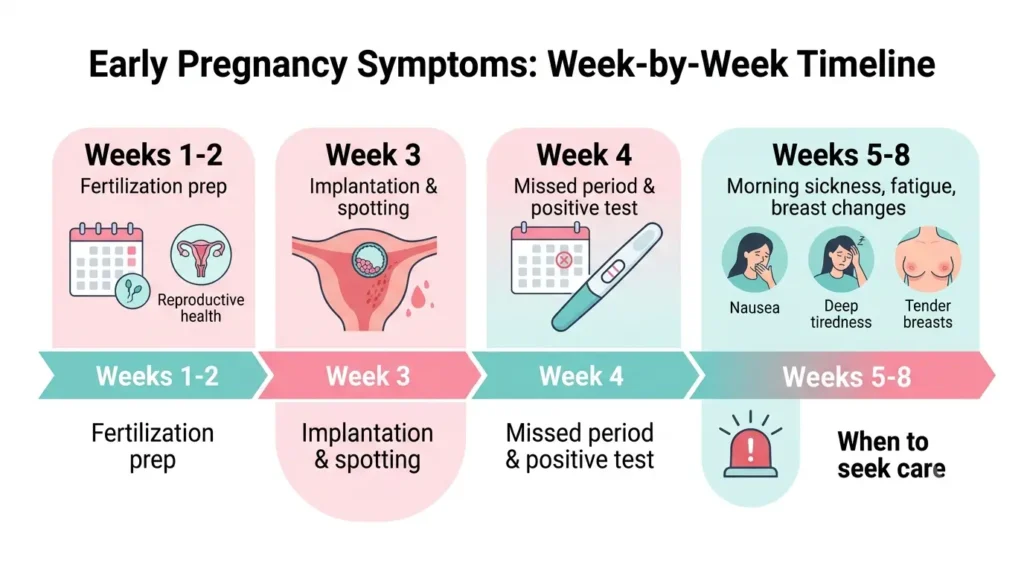
The days around a missed period can be stressful. One moment you are checking a calendar, the next you are reading symptom lists and wondering what every twinge means. Online information can make this uncertainty worse. Many first-trimester symptoms are related to normal hormonal changes, but symptoms alone cannot confirm that a pregnancy is healthy or rule out a complication. This guide explains the usual timeline, pregnancy-test timing, spotting and discharge, practical symptom management, and warning signs that need medical assessment. At Blossom Women Wellness Clinic in Vaishali Nagar, Jaipur, Dr. Sunita Choudhary can discuss pregnancy confirmation, symptoms and antenatal-care planning. This article provides general health information. For early pregnancy care in Jaipur, book a consultation on +91 9928070006. Early Pregnancy Symptoms Week by Week Every pregnancy runs on its own timeline, but the following is a general guide. Symptoms and their timing vary from person to person. Weeks What Is Happening Possible Signs 1–2 Pregnancy is dated from the first day of the last menstrual period; ovulation often occurs around this part of the cycle Usually no pregnancy symptoms; basal body temperature may rise after ovulation 3 Fertilisation or implantation may occur, depending on cycle timing Often no symptoms; some people notice light spotting or mild cramps 4 The expected period may be due, and hCG may be detectable Missed period; a home pregnancy test may be positive 5–6 Pregnancy hormones continue to rise Nausea, fatigue, frequent urination or breast tenderness may begin 7–8 Early pregnancy symptoms may become more noticeable Food aversions, smell sensitivity, mood changes or ongoing nausea In Hindi: Pregnancy ke shuruaati lakshan mein period miss hona, thakan, breast tenderness ya nausea shamil ho sakte hain. Har mahila mein symptoms alag hote hain, aur kuch ko shuru mein koi khaas symptom nahi hota. Weeks 1–2: Understanding Pregnancy Dating Pregnancy weeks are counted from the first day of the last menstrual period. As a result, during weeks 1 and 2, conception has usually not yet occurred. Basal body temperature can rise after ovulation. If it remains elevated, this may be consistent with pregnancy, but temperature tracking cannot confirm pregnancy. A home pregnancy test used at the appropriate time is more useful for confirmation. Week 3: Fertilisation and Possible Implantation Around this stage, fertilisation and implantation may occur depending on the timing of ovulation. Many people notice nothing. Others may experience mild cramps or light spotting, but these symptoms can also occur for other reasons. Possible changes include: Light spotting: Pink or brown spotting is sometimes reported, but colour and duration cannot establish that it is implantation-related. Mild cramps: Light cramping can occur for several reasons and cannot reliably distinguish pregnancy from an approaching period. Discharge changes: Vaginal discharge varies throughout the menstrual cycle and is not a reliable way to diagnose pregnancy. Not having symptoms at this stage is common and does not, by itself, indicate a problem. Week 4: Missed Period and Pregnancy Testing Around the time your period is expected, a home pregnancy test may detect human chorionic gonadotropin (hCG), a hormone produced during pregnancy. A home pregnancy test is generally most reliable from the first day of a missed period. If you test early, first-morning urine may help because it is more concentrated. Follow the specific test instructions. Read our guide to using a pregnancy test kit correctly. If the result is negative but your period still has not arrived, repeat the test after a few days. Seek medical advice if your period remains absent or you have concerning symptoms. Weeks 5–8: Common Early Pregnancy Symptoms As pregnancy progresses, symptoms may become more noticeable. Some people experience several symptoms; others experience few. Morning sickness: Nausea with or without vomiting commonly begins around weeks 5–6, though timing varies. It can happen at any time of day. Fatigue: Hormonal changes and the body's adjustment to pregnancy can contribute to tiredness. Breast changes: Breasts may feel tender, heavy or swollen. Taste and smell changes: Some people notice a metallic taste, stronger sensitivity to smells or food aversions. Frequent urination: Hormonal changes and increased blood flow through the kidneys may increase the need to urinate. Nasal congestion: Some people experience nasal stuffiness during pregnancy. Mood changes: Hormonal changes, sleep disruption and the stress of early pregnancy can affect mood. Not feeling pregnant at 5 or 6 weeks? That can happen. The absence of symptoms alone does not establish whether a pregnancy is progressing normally. Antenatal assessment and any recommended scans or tests provide more useful information. See our antenatal checkup schedule. Implantation Bleeding vs Early Period vs Warning Bleeding Spotting around the time of an expected period can be confusing. However, bleeding patterns alone cannot confirm implantation or rule out a complication. Feature Light Spotting Menstrual Period Possible Ectopic Pregnancy Warning Timing May occur around the time of implantation or for other reasons Usually around the expected period Symptoms can develop in early pregnancy Colour and flow May be pink, brown or red; often light Flow varies and is usually similar to the person's usual period Bleeding can vary and may be light or irregular Duration Variable Often lasts several days May be persistent or intermittent Pain May occur with or without mild cramps Cramps may occur One-sided or severe pelvic pain can be a warning sign The appearance of bleeding cannot reliably establish its cause. Severe or one-sided abdominal or pelvic pain, shoulder-tip pain, fainting, collapse or significant dizziness — especially with bleeding — need emergency assessment. These can be signs of an ectopic pregnancy, in which a pregnancy develops outside the uterus. White Discharge in Early Pregnancy: What Is Normal? Thin, clear or milky-white discharge without a strong smell, itching or soreness can be normal during pregnancy. Discharge patterns also change throughout the menstrual cycle, so discharge alone cannot confirm pregnancy or show that a pregnancy is progressing normally. Contact a clinician if discharge comes with: Itching, burning or soreness A strong or unpleasant smell A change to green or grey discharge Pain, fever or bleeding Some infections are treatable during pregnancy, but the appropriate treatment depends on the cause. Avoid self-treating with medicines or vaginal products without advice from a qualified clinician. What to Avoid During Early Pregnancy Food-safety precautions and avoiding harmful substances can help reduce preventable risks during pregnancy. Food and drink Avoid raw or undercooked meat, seafood and eggs. Avoid unpasteurised milk and products made with unpasteurised ingredients. Follow local pregnancy guidance on high-mercury fish. Keep total caffeine intake below 200 mg per day, unless your clinician advises otherwise. Caffeine content varies by drink and serving size. Wash fruits and vegetables thoroughly and follow safe food-handling practices. Substances and medicines Avoid alcohol during pregnancy; no safe amount has been established. Avoid smoking and nicotine products. Check prescription medicines, over-the-counter medicines and herbal supplements with a clinician or pharmacist. Do not abruptly stop a prescribed medicine without medical advice. Environment and heat Seek pregnancy-specific advice about hot tubs, saunas and activities that substantially raise core body temperature. Avoid handling cat litter if possible. If you must handle it, use gloves and wash your hands afterwards. Take care around pesticides and harsh chemical solvents; follow product safety guidance and ask a clinician about specific exposures. For more food-related guidance, read our article on fruits during pregnancy. Managing Common First-Trimester Symptoms Morning sickness Try small, frequent meals rather than allowing your stomach to remain empty for long periods. Keep a simple snack nearby if eating before getting out of bed helps. Sip fluids regularly. Avoid foods or smells that trigger nausea when possible. Ask a clinician or pharmacist before using medicines, supplements or concentrated herbal products for nausea. If vomiting prevents you from keeping fluids down, or you have very little urine, marked weakness or dizziness, seek prompt medical advice. Fatigue Take short rest breaks during the workday where possible. Drink water regularly and eat balanced meals. Prioritise sleep and ask for help with non-essential tasks. Discuss persistent or severe fatigue with your clinician, who may assess for anaemia or other causes. Mood changes and anxiety Talk with someone you trust about worries or uncertainty. Gentle activity, breathing exercises and adequate rest may help. Limit repeated online symptom searches if they increase anxiety. Contact your healthcare team if anxiety is persistent, overwhelming or affecting daily life. Symptoms can fluctuate from day to day. A change in nausea alone cannot diagnose miscarriage or confirm that everything is fine. If symptoms change alongside bleeding or significant pain, contact a clinician promptly. Warning Signs: When to Seek Medical Care Seek emergency medical assessment for: Heavy vaginal bleeding, particularly with severe abdominal or pelvic pain, weakness or dizziness. Severe or one-sided abdominal or pelvic pain. Shoulder-tip pain, fainting, collapse or significant dizziness, especially if pregnancy is possible. Severe pain or bleeding accompanied by feeling faint or very unwell. Contact a clinician promptly for: Fever or chills. Pain or burning while passing urine. Unusual discharge with a strong smell, itching or soreness. Repeated vomiting or difficulty keeping fluids down. Symptoms that are severe, persistent or concerning to you. These symptoms do not always mean a pregnancy complication, but they should not be ignored. Do not delay emergency care while waiting for a home pregnancy test if you have severe pain, fainting or heavy bleeding. What to Do After a Positive Pregnancy Test A positive home pregnancy test is a good reason to arrange antenatal care. Consider these steps: Discuss folic acid. A commonly recommended dose for people at average risk is 400 micrograms daily, starting before conception when possible and continuing in early pregnancy. Some people need a different dose based on their medical history, so confirm the appropriate dose with your clinician. Review your medicines. Make a list of prescription medicines, over-the-counter products and supplements, and ask a clinician or pharmacist whether they are suitable during pregnancy. Do not stop essential prescribed treatment without advice. Arrange your first antenatal visit. Your clinician can advise when to attend, based on your last menstrual period, symptoms and medical history. Discuss any warning signs. Pain, bleeding, fainting or other concerning symptoms may require assessment sooner than a routine appointment. Read our antenatal checkup schedule guide for more information about pregnancy visits and tests. Later in pregnancy, you can also discuss birth options with your healthcare team; our normal delivery and painless delivery guide introduces some topics to discuss. Guidance Referenced ACOG — American College of Obstetricians and Gynecologists: Patient resources on early pregnancy and morning sickness: acog.org WHO — World Health Organization: Recommendations on Antenatal Care for a Positive Pregnancy Experience: who.int FOGSI — Federation of Obstetric and Gynaecological Societies of India: Clinical practice guidance: fogsi.org Individual symptoms and schedules depend on your clinician's assessment of your specific pregnancy. Early Pregnancy Care in Vaishali Nagar, Jaipur Have you received a positive pregnancy test, or are you unsure whether your symptoms fit the usual pattern? You can contact Dr. Sunita Choudhary at Blossom Women Wellness Clinic to discuss pregnancy confirmation, symptoms and antenatal-care planning. Learn more about our pregnancy and maternity care services. Address: Gate 4, 10A, Shiv Path, near SDC Aishwarya Heights, Nand Vihar Colony, Nemi Nagar Extension, Block A, Vaishali Nagar, Jaipur 302021 Call / WhatsApp: +91 9928070006 Consultations available in: English and Hindi This article provides general medical information only and does not constitute a formal diagnosis or personalised treatment plan. For individual medical advice, please schedule a consultation. Dr. Sunita Choudhary MBBS, MS (Obstetrics & Gynaecology), FOGSI Member Senior Consultant Gynecologist & Obstetrician Blossom Women Wellness Clinic, Vaishali Nagar | Shalby Multi-Speciality Hospital, Jaipur

30 Oct 2026
Common questions

Frequently asked questions

Can I exercise throughout pregnancy?
Many women can exercise safely during pregnancy, but the type and intensity should be suited to their health, fitness and pregnancy. Women with complications should follow their obstetrician's advice.
Is yoga safe during pregnancy?
Prenatal yoga may be helpful when taught by a qualified instructor. Avoid difficult poses, overheating, prolonged lying flat later in pregnancy and movements that create pain or instability.
Can I drink tea or coffee?
Moderate caffeine intake may be acceptable, but the total should usually remain below 200 mg per day. Include caffeine from tea, coffee, cola, chocolate and medicines when estimating your intake.
Can I take herbal supplements?
Do not assume herbal products are safe. Some may affect hormones, the uterus, blood pressure or prescribed medicines. Consult your doctor first.
What should I do if I smoked or drank before discovering the pregnancy?
Stop now and discuss the exposure with your obstetrician. Honest information helps your doctor provide appropriate guidance and monitoring.

Have a question about your health?

Dr. Sunita answers on WhatsApp - warm, unhurried, in your language. Same-week appointments available.