
Menopause: Symptoms, Diet & Changes
Menopause is an important stage in a woman’s life. While it is a natural transition, the physical and emotional changes that come with it can sometimes feel confusing or uncomfortable.
In this guide, Dr. Sunita Choudhary, Senior Consultant – Obstetrics & Gynaecology, explains what menopause is, some of the symptoms women may experience and the importance of looking after overall health during this phase.
What is menopause?
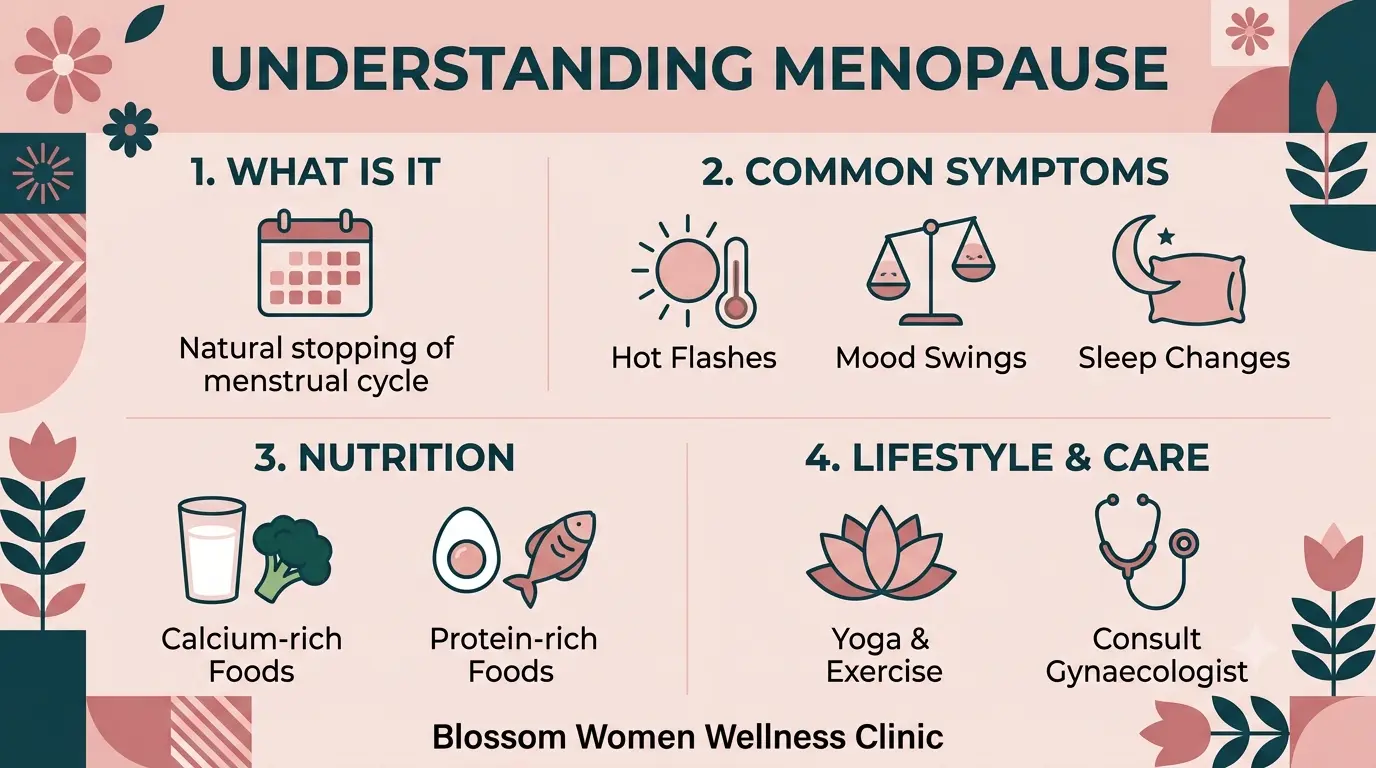
Menopause is the stage in a woman’s life when her menstrual periods stop as part of the natural changes that occur with age.
During this transition, women may experience several physical and emotional changes. However, menopause does not feel exactly the same for everyone. Some women may notice only a few symptoms, while others may experience several changes that affect their daily routine and overall well-being.
Understanding these changes can make it easier to recognise what is happening in your body and seek medical guidance when required.
Symptoms can also begin before periods stop completely. If you are still having periods but have started noticing menopause-related changes, read our guide to Perimenopause vs Menopause: What’s the Difference?
What are the common symptoms of menopause?
Dr. Sunita highlights several changes that women may experience during menopause. These include:
- Hot flashes or sudden feelings of heat
- Mood swings
- Forgetfulness
- Depression or emotional changes
- Difficulty sleeping
- Difficulty concentrating
- Reduced interest in usual activities
- Headaches
- Joint pain
- Weight gain
- Vaginal dryness
- Skin dryness
- Dryness of the eyes
- Hair thinning or hair fall
- Unwanted facial hair
The symptoms and their intensity can vary from woman to woman.
Hot flashes during menopause
One of the common symptoms Dr. Sunita talks about is hot flashes.
Women may experience a sudden sensation of heat during menopause. These episodes can sometimes feel uncomfortable and may also interfere with normal activities or sleep.
If such symptoms become difficult to manage, discussing them with your gynaecologist can help you better understand your individual situation.
Mood, sleep and concentration changes
Menopause can involve more than physical symptoms. Dr. Sunita also highlights changes such as:
- Mood swings
- Forgetfulness
- Difficulty concentrating
- Difficulty sleeping
- Depression
- Reduced interest in everyday activities
These changes can influence a woman’s day-to-day well-being and quality of life.
Recognising emotional and sleep-related changes is just as important as recognising physical symptoms during menopause.
Skin, hair and dryness during menopause
Women may also notice changes affecting the skin, hair, eyes and intimate comfort. Dr. Sunita mentions:
- Skin dryness
- Vaginal dryness
- Dryness of the eyes
- Hair thinning or hair fall
- Unwanted facial hair
These changes are among the different symptoms a woman may notice as she goes through menopause.
Joint pain and weight changes
Joint pain and weight gain are also among the symptoms discussed by Dr. Sunita.
These changes are another reason why paying attention to everyday health and lifestyle becomes important during this stage of life.
How can you support your health during menopause?
Along with explaining the symptoms of menopause, Dr. Sunita also talks about the importance of looking after your health through appropriate food choices and physical activity.
Focus on a balanced diet
Nutrition is an important part of looking after your health during menopause.
Dr. Sunita particularly advises including calcium-rich and protein-rich foods as part of the diet during this phase.
A balanced diet with appropriate calcium and protein intake can form an important part of maintaining overall health as the body goes through menopausal changes.
Individual dietary requirements can differ, so women with specific health concerns can discuss their diet with their doctor.
Stay physically active
Dr. Sunita also highlights the importance of physical activity and yoga during menopause.
Keeping the body active and incorporating suitable exercise into your routine can be an important part of taking care of yourself during this stage of life.
The type and amount of physical activity may vary according to an individual woman’s health and circumstances.
What about hormone therapy during menopause?
Dr. Sunita also refers to hormone therapy while discussing menopause management.
Hormone therapy is a medical treatment, and whether it is appropriate depends on the individual woman.
It should therefore be discussed with a gynaecologist rather than started independently or based on another person’s experience.
The bottom line
Menopause is a natural stage of life, but the changes associated with it can affect a woman physically as well as emotionally.
Hot flashes, mood changes, disturbed sleep, forgetfulness, joint discomfort, weight changes, dryness and hair or skin changes are among the symptoms Dr. Sunita discusses.
Paying attention to nutrition—including calcium- and protein-rich foods—along with physical activity and yoga can form an important part of looking after yourself during this transition.
Most importantly, you do not have to ignore symptoms that are affecting your everyday life.
If you are experiencing concerns related to menopause, speaking with your gynaecologist can help you better understand the changes you are experiencing and the appropriate next steps for your individual health.
Dr. Sunita Choudhary
Senior Consultant, Obstetrics and Gynaecology
Blossom Women Wellness Clinic, Vaishali Nagar, Jaipur
This article is general health education, not personalised medical advice. For guidance specific to your case, book a consultation on +91 99280 70006 or message on WhatsApp.