
Perimenopause vs Menopause
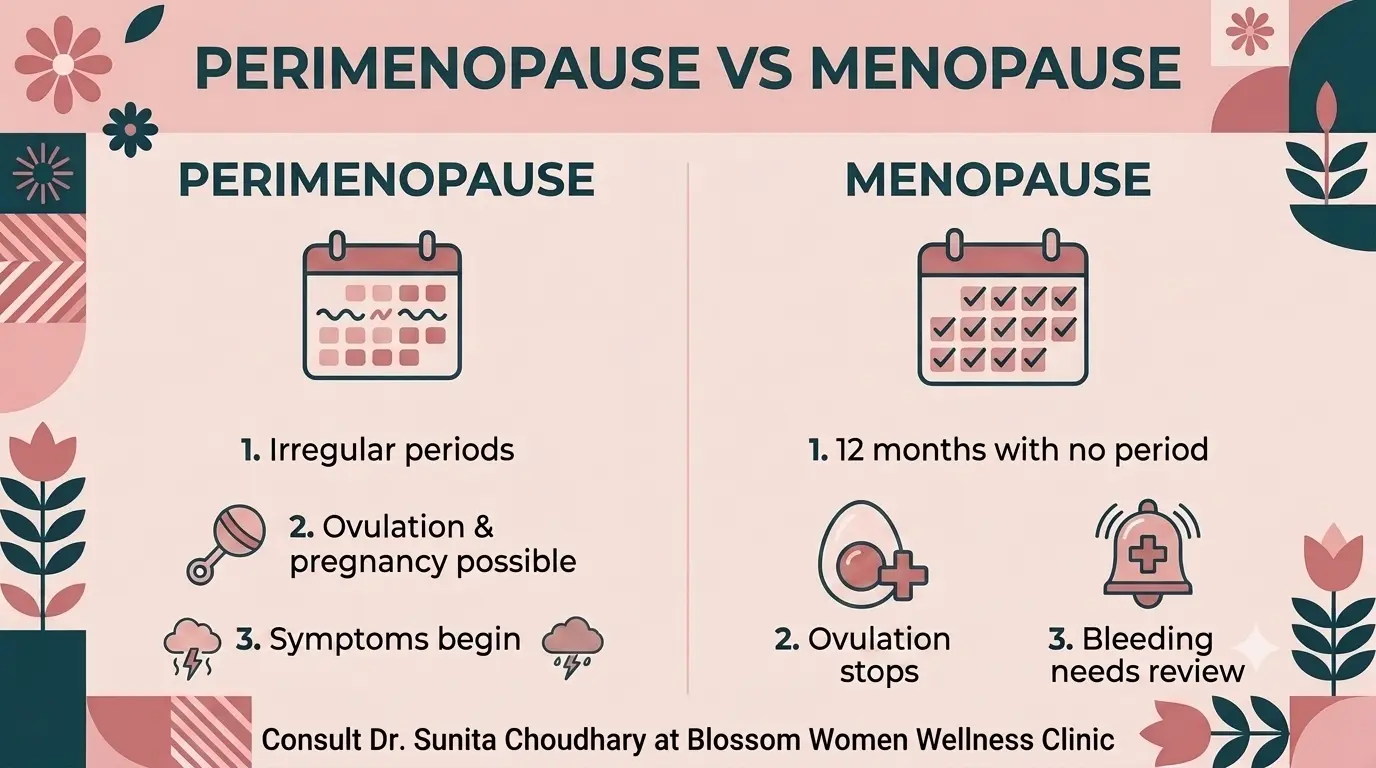
Perimenopause and menopause are part of the same natural transition, but they describe different stages. The simplest difference is this: during perimenopause, periods are still occurring, although they may become irregular; menopause is reached after 12 consecutive months without a menstrual period, when there is no other medical reason for periods to have stopped.
What is perimenopause?
Perimenopause is the stage leading up to menopause. Hormone levels change during this time, and menstrual cycles may become less predictable.
Periods may come more or less often, and bleeding may become heavier or lighter. Some women also begin to notice menopause-related symptoms such as hot flashes, sleep problems, mood changes or vaginal dryness.
The timing varies from woman to woman. Perimenopause commonly begins in the 40s, although it can begin earlier.
What is menopause?
Menopause is reached when a woman has gone 12 consecutive months without a menstrual period, provided there is no other medical reason for the periods to have stopped.
Symptoms do not necessarily stop at that point. Some may improve, while others can continue after menopause.
Here is a quick side-by-side comparison of the two stages:
| Perimenopause | Menopause |
|---|---|
| Transition leading up to menopause | Reached after 12 consecutive months without a period |
| Periods may become irregular | The final menstrual period has occurred |
| Menopause-related symptoms may begin | Symptoms may continue afterwards |
| Ovulation can still occur | The stage after this is postmenopause |
| Pregnancy can still be possible | Bleeding after menopause needs medical review |
| Symptoms can overlap across both stages and vary between women. | |
Can you have menopause symptoms while still having periods?
Yes. Symptoms commonly associated with menopause can begin during perimenopause while periods are still occurring. This is why symptoms alone do not necessarily mean that menopause has already been reached.
For a fuller overview of hot flashes, mood and sleep changes, joint discomfort, dryness and other common menopause symptoms, read our guide: Menopause Symptoms: What Changes Can You Expect?
How do you know which stage you are in?
There is no single symptom that confirms perimenopause in every woman. A gynaecologist may consider your age, menstrual pattern, symptoms, medical history and whether another explanation needs to be considered.
Routine hormone testing is not required for every woman. Tests may be useful in particular circumstances, such as when symptoms occur earlier than expected or the diagnosis is uncertain.
Can you still get pregnant during perimenopause?
Yes. Ovulation can still occur during perimenopause, even when periods have become irregular. Pregnancy therefore remains possible before menopause is reached.
If avoiding pregnancy is important, discuss contraception with your healthcare professional rather than relying on irregular periods as a sign that contraception is no longer needed.
When should you speak with a gynaecologist?
Perimenopause and menopause are natural stages, but medical guidance can be useful when:
- Symptoms are significantly affecting sleep, mood, work or everyday activities.
- Bleeding becomes unusually heavy or otherwise concerns you.
- You have vaginal bleeding after 12 months without a period.
- Periods stop much earlier than expected.
- You are unsure whether your symptoms are related to perimenopause.
- You would like to discuss ways of managing troublesome symptoms, including dedicated menopause care at our clinic.
The main point
Perimenopause is the transition before menopause; menopause is the point reached after 12 consecutive months without a period. Symptoms can begin before that milestone and may continue afterwards. Knowing the difference can help you describe your symptoms more clearly and decide when to seek individual guidance.
At Blossom Women Wellness Clinic, Dr. Sunita Choudhary provides gynaecological guidance for women through different stages of life, including perimenopause and menopause.
If you have concerns about perimenopause or menopause, please visit Blossom Women Wellness Clinic and consult Dr. Sunita Choudhary for personalised guidance.
Dr. Sunita Choudhary
Senior Consultant, Obstetrics and Gynaecology
Blossom Women Wellness Clinic, Vaishali Nagar, Jaipur
This article is general health education, not personalised medical advice. For guidance specific to your case, book a consultation on +91 99280 70006 or message on WhatsApp.