
Your First Pregnancy: A Calm Guide
Finding out you are expecting your first child brings a wave of joy, anticipation, and a fair share of anxiety. Stepping into the unknown can feel overwhelming, but it is completely natural to want to protect yourself and your baby every step of the way.
It’s okay to be cautious. With the right guidance and mindful habits, you can navigate your first pregnancy with confidence.
At Blossom Women Wellness Clinic, we understand that every first-time mother needs reassurance, clear guidance, and compassionate care throughout this transformative journey.
Remember: Being cautious during your first pregnancy isn’t about being fearful—it’s about being informed and prepared. Your desire to protect yourself and your baby shows your strength as an expectant mother.
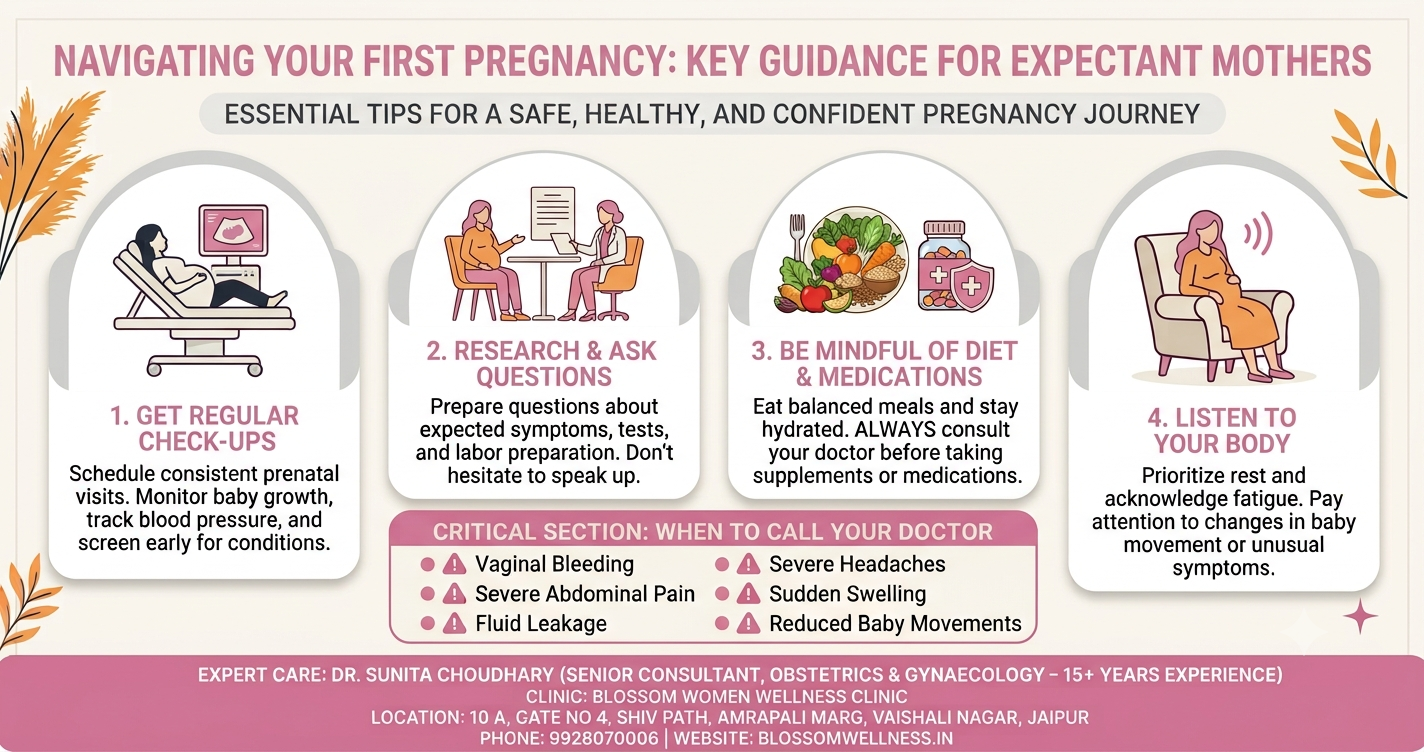
Get regular check-ups
Consistent prenatal visits allow your doctor to monitor your baby’s growth, track your health, and detect potential issues early. During these appointments, your obstetrician will:
- Track your baby’s development through ultrasound scans
- Monitor your blood pressure, weight, and overall health
- Screen for gestational diabetes and other conditions
- Provide guidance on nutrition and lifestyle changes
- Discuss birth planning and postpartum care
Regular monitoring helps ensure that both you and your baby stay healthy throughout pregnancy.
Research & ask questions
Never hesitate to speak up during appointments. Writing down questions beforehand helps ensure you get clear answers about symptoms, delivery plans, and care.
Good questions to ask your obstetrician include:
- What symptoms should I expect at each stage?
- When should I call you versus when to wait?
- What warning signs need immediate medical attention?
- What prenatal tests do you recommend and why?
- How do I prepare for labour and delivery?
- What postpartum support will I need?
Your healthcare team is there to support you—no question is too small or too basic.
Be mindful of diet & medications
Nourish your body with balanced meals, stay hydrated, and always double-check with your specialist before taking any over-the-counter medication or supplement.
Nutrition basics for pregnancy
- Eat a variety of fruits, vegetables, whole grains, and proteins
- Include calcium-rich foods for baby’s development
- Stay hydrated with plenty of water
- Avoid raw or undercooked foods that might carry infection risk
- Limit caffeine and avoid alcohol completely
Medication safety
Always consult your specialist before taking:
- Over-the-counter pain relievers
- Herbal supplements or vitamins
- Cold or allergy medications
- Any prescription medications from other doctors
Your obstetrician can guide you on safe alternatives and what to avoid.
Listen to your body
Rest when you feel exhausted, slow down when needed, and pay attention to any unusual discomfort or changes.
Your body gives important signals during pregnancy:
- Fatigue is common, especially in the first and third trimesters
- Discomfort that feels different from usual pregnancy changes deserves attention
- Reduced baby movements later in pregnancy should prompt a call to your doctor
- Emotional changes are normal but persistent anxiety or low mood should be discussed
Trust your instincts—if something doesn’t feel right, reach out to your healthcare team.
Expert care for your journey
Partnering with an experienced specialist provides reassurance throughout your pregnancy. At Blossom Women Wellness Clinic, you’ll receive compassionate care tailored to your needs.
Dr. Sunita Choudhary, Senior Consultant in Obstetrics & Gynaecology with over 15 years of experience, provides expert guidance through every stage of pregnancy, from prenatal care through delivery and postpartum support.
What to expect at each stage
First trimester (weeks 1-12)
- Initial confirmation and viability assessment
- Early screening tests and health baseline
- Managing morning sickness and fatigue
- Establishing prenatal care routine
Second trimester (weeks 13-26)
- Anatomy scan and baby development monitoring
- Glucose screening for gestational diabetes
- Feeling baby movements begin (quickening)
- Birth planning discussions start
Third trimester (weeks 27-40)
- More frequent monitoring visits
- Baby growth and position assessment
- Finalizing birth plan and hospital arrangements
- Preparing for labour, delivery, and postpartum
Building your support system
Pregnancy isn’t a journey to navigate alone. Build your support network by:
- Choosing an obstetrician you trust and feel comfortable with
- Including your partner in appointments and decision-making
- Connecting with other expectant mothers for shared experiences
- Planning practical help for after baby arrives
A strong support system makes the entire pregnancy experience more manageable and enjoyable.
When to call your doctor
Contact your healthcare provider if you experience:
- Vaginal bleeding or spotting
- Severe abdominal pain or cramping
- Fluid leakage from the vagina
- Severe headache or visual changes
- Sudden swelling in hands, face, or feet
- Fever or persistent vomiting
- Reduced baby movements (after feeling them regularly)
- Any symptoms that concern you
You don’t have to figure this out alone. Expert guidance is available to help you navigate pregnancy with confidence and peace of mind.
The bottom line
Your first pregnancy is a journey of discovery, growth, and profound change. Being cautious, asking questions, and seeking expert care are all signs of a responsible expectant mother—not anxiety to be dismissed.
At Blossom Women Wellness Clinic, we’re here to support you with expert obstetric care, clear guidance, and compassionate understanding throughout your pregnancy journey.
If you’re expecting your first child and looking for experienced, personalized pregnancy care in Jaipur, reach out to us today.
Expert Care for Your Journey
Dr. Sunita Choudhary
Senior Consultant, Obstetrics & Gynaecology
Over 15 years of experience in women’s healthcare
Contact Information:
📍 Clinic: Blossom Women Wellness Clinic
📞 Phone: 9928070006
🌐 Website: blossomwellness.in
📍 Location: 10 A, Gate no 4, Shiv Path, Amrapali Marg, Vaishali Nagar, Jaipur
This article is general health education, not personalised medical advice. For guidance specific to your case, book a consultation on +91 99280 70006 or message on WhatsApp.