Fertility - IUI

Female Infertility: Causes & Tests
23 Oct 2026 · Dr. Sunita Choudhary

Female Infertility: Causes & Tests
TL;DR Female infertility is defined as not conceiving after 12 months of regular, unprotected intercourse, or after 6 months if the woman is 35 or older. The WHO estimates that approximately one in six people of reproductive age experience infertility at some point in their lives. The causes are commonly grouped into five categories, ovulatory dysfunction, tubal factors, uterine factors, endometriosis and age-related egg decline, and evaluation considers both partners, because male factors, alone or together with female factors, are estimated to be involved in roughly half of couples. For a fertility assessment in Vaishali Nagar, Jaipur, call +91 9928070006.

The single most useful thing to know: infertility in females is a medical condition, not a verdict. In many couples an evaluation identifies contributing causes, and treatment options exist for many of them, though in some couples no specific cause is found even after complete testing.

At Blossom Women Wellness Clinic in Vaishali Nagar, Jaipur, Dr. Sunita Choudhary runs a structured fertility evaluation: a clear timeline, only the tests your history calls for, results explained without jargon, and a treatment plan shaped around you.

This article provides general health information. For a fertility assessment in Jaipur, book a consultation on +91 9928070006.

What is Female Infertility?

To define female infertility precisely: difficulty conceiving despite regular, unprotected intercourse for the time thresholds above. Doctors also classify it by history:

Category Meaning
Primary infertility A woman has never conceived despite trying
Secondary infertility A woman has conceived before (a previous pregnancy, sometimes ending in miscarriage) but cannot conceive again

Secondary infertility surprises many couples, a previous pregnancy does not guarantee the next, because tubes, ovulation, sperm counts and age can all change between pregnancies.

When Should You Actually See a Doctor?

The calendar rule is simple:

  • Under 35: try for up to 12 months before a formal evaluation.
  • 35 or older: seek evaluation after 6 months, fertility generally declines faster here, so time matters more.
  • Any age, go sooner if cycles are irregular or absent, if PCOS or endometriosis is already diagnosed, if there is a history of pelvic infection, tuberculosis, ectopic pregnancy or previous surgery on the tubes, or if periods have stopped after stopping contraception.

Waiting a full year with clearly irregular cycles is time lost, not prudence. Women with PCOS, for instance, often have an ovulation problem that can be treated, getting pregnant with PCOD is possible for many, but usually only once ovulation is addressed deliberately.

Signs of Female Infertility: When to Get Evaluated

There is no single “sign you can’t get pregnant”, most women with fertility problems feel completely healthy. What follows are not proof of infertility; they are findings that warrant a gynaecological evaluation, because each can point to a treatable reason why conception is taking longer:

  1. Irregular or absent periods, the most direct clue to ovulatory dysfunction, which has several treatable causes including PCOS and thyroid disorder.
  2. Cycles shorter than 21 days or longer than 35 days, ovulation may be unpredictable.
  3. Very painful periods, painful intercourse, or heavy bleeding, symptoms sometimes associated with endometriosis, fibroids or adenomyosis, which deserve assessment in their own right.
  4. Periods that do not return within about three months of stopping contraception, worth checking rather than waiting.
  5. Two or more miscarriages, recurrent pregnancy loss is investigated as part of fertility care.
  6. Acne, excess facial hair and weight gain together with irregular cycles, a pattern consistent with PCOS that a doctor can confirm or rule out with simple tests.

One caution: symptoms in points 3 and 6 are common in women who conceive without difficulty. They justify an evaluation, they do not by themselves mean anything is wrong.

Who is more likely to face difficulty conceiving? Women over 35, women with diagnosed PCOS or thyroid disease, those significantly under- or overweight, smokers, and women with a history of pelvic infection, tuberculosis, endometriosis or prior tubal pregnancy. If several of these describe you, book the evaluation early rather than waiting out the calendar.

Major Causes of Female Infertility

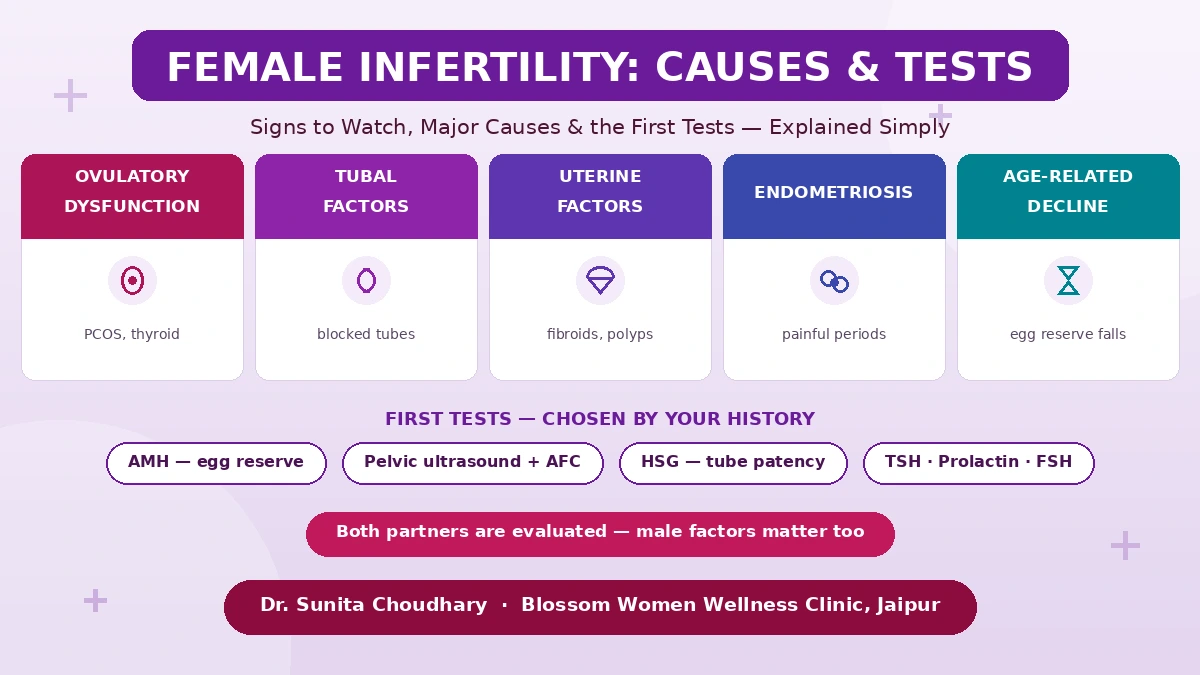
Textbooks and guidance bodies commonly group the female reasons for infertility into five major categories. The relative contribution of each varies between populations, but the grouping looks like this:

Category What Goes Wrong Typical Clues
Ovulatory dysfunction Eggs are not released regularly, causes include PCOS, thyroid disorder, high prolactin and reduced egg reserve Irregular or absent periods, hormonal imbalance symptoms
Tubal factors Fallopian tubes blocked or damaged, old pelvic infection, TB, adhesions after surgery or appendicitis Often silent; sometimes pelvic pain or history of ectopic pregnancy
Uterine factors Fibroids (especially those distorting the cavity), polyps, adhesions inside the uterus Heavy or irregular bleeding, recurrent miscarriage, or no symptoms at all
Endometriosis Uterine-lining tissue grows outside the uterus, potentially affecting ovaries, tubes and pelvic environment Painful periods, pain during intercourse, chronic pelvic pain
Age-related decline Egg quantity and quality both fall, gradually through the 30s, more steeply after 37 Age itself; tests may show lower AMH and antral follicle count

Two of these categories deserve a note.

Ovulatory dysfunction is the category most often cited as a leading contributor in population studies, and PCOS is a common cause of ovulatory dysfunction, though not the only one, and its share varies by population. The encouraging part: once a specific ovulation problem is identified, it is often manageable. If your cycles have never been regular, start with our PCOD symptoms and care guide and the FAQ-style PCOS myths and fertility explainer; irregular periods themselves deserve evaluation, as covered in irregular periods: causes and care.

Age is the one factor no treatment reverses: the pool of eggs a woman is born with never replenishes, and both quantity and quality decline with age, slowly through the early 30s, more quickly after 37. That is a reason to seek evaluation sooner with age, not a prediction about any individual woman; plenty of pregnancies happen in the late 30s and beyond.

Regular Periods but Not Getting Pregnant?

This is one of the most searched, and most quietly frustrating, situations: reason for not getting pregnant when everything is normal. The periods arrive on time, the lifestyle is healthy, and still no pregnancy.

Regular periods are reassuring, they usually mean ovulation is happening. But conception needs several things to work at once:

  1. Regular ovulation, usually present when periods are regular.
  2. Open tubes, the egg and sperm must meet inside the tube; blocks are silent and only visible on an HSG.
  3. Healthy sperm, male factors, alone or alongside female factors, are estimated to be involved in roughly half of couples; a regular cycle in the female partner does not check this box.
  4. A receptive uterus and good egg quality, polyps, cavity-distorting fibroids, and age-related egg changes can all sit quietly behind normal periods.

When the standard evaluation comes back normal, doctors call it unexplained infertility, it accounts for a meaningful share of couples. “Unexplained” does not mean untreatable, and it does not mean there is only one path forward. Management is individualised: it depends on the woman’s age, how long the couple has been trying, whether there have been previous pregnancies, and the couple’s own preferences, ranging from continued timed attempts, to ovarian stimulation, to IUI or IVF.

Tests for Infertility in Females

There is no fixed test package for everyone. Which tests for infertility in females are done, and in what order, depends on each woman’s history, cycle pattern, symptoms and examination findings. The tests below are the ones most commonly used, not a checklist every patient needs.

Female infertility blood tests

  • AMH (anti-Müllerian hormone), a blood test that helps estimate the ovarian egg reserve, valid on any day of the cycle. It can also help predict how the ovaries are likely to respond to stimulation during treatment. What it does not do: measure egg quality, or predict on its own whether a woman will conceive naturally, a low value is a planning input, never a verdict.
  • Selected hormone tests, FSH, LH and oestradiol (typically drawn early in the cycle), TSH and prolactin are ordered when the history points to them (irregular cycles, symptoms of thyroid or prolactin problems, suspected ovulatory dysfunction). They are not universal screening tests that every evaluation requires; TSH and prolactin are, however, common early additions because thyroid and milk-hormone disturbances are frequent, silent and treatable contributors.

Scans and tube tests

  • Pelvic ultrasound (with antral follicle count), often recommended as part of the initial assessment: it counts the small resting follicles, examines the uterus for fibroids or polyps, and looks at the ovaries; it is also part of confirming a PCOS pattern.
  • HSG (hysterosalpingography), an X-ray with dye showing whether the fallopian tubes are open and the uterine cavity is normal. This is recommended when tubal factor is a realistic possibility (history of infection, ectopic pregnancy, previous surgery, or unexplained difficulty) rather than for everyone automatically. Done after the period ends, before ovulation; a few minutes of cramping, no anaesthesia.

For the partner

  • Semen analysis, count, movement and shape of sperm. Because male factors, alone or alongside female factors, are estimated to be involved in roughly half of couples, this is commonly among the first tests ordered, a genuine fertility test for couples, running both tracks in parallel.

The consultation itself

Bring your last period date, a 3–6 month cycle record, previous reports, and a list of current medicines. Your doctor will use the first consultation to decide which, and how many, of the above tests your situation actually calls for.

Treatment of Female Infertility: The Options

The treatment of female infertility is not a fixed ladder climbed step by step. The right approach depends on the cause found, the woman’s age, how long the couple has been trying, previous treatments, and their preferences, and appropriate treatment sometimes skips a step entirely. The options below are the building blocks:

  1. Lifestyle measures, for women with PCOS and higher body weight, studies show that weight reduction of even 5–10% can improve ovulation and metabolic markers, though results vary between individuals; stopping smoking, moderating caffeine and starting folic acid are standard advice. This is the best-evidenced first step for many couples, and the reason to complete an evaluation before spending money elsewhere. Ayurvedic and herbal preparations are widely marketed for female infertility, but robust clinical evidence for most is limited; the main risk is not the preparation itself, it is the months lost while a specific, treatable cause, a blocked tube, a thyroid disorder, anovulation, goes unevaluated. Get tested first; then choose with full information.
  2. Ovulation induction, tablets such as letrozole or clomiphene, with ultrasound tracking, may be recommended when anovulation is confirmed, particularly with PCOS.
  3. Treating what is found, thyroid or prolactin correction; laparoscopic treatment for endometriosis; hysteroscopic removal of polyps or cavity-distorting fibroids. Sometimes treating the found problem is all that is needed.
  4. IUI (intrauterine insemination), prepared sperm placed directly into the uterus at ovulation. It may be suggested for mild male factors, unexplained infertility or alongside ovulation induction, depending on the couple’s situation. (IUI vs IVF in one line: IUI assists the natural process inside the body; IVF fertilises the eggs outside it.)
  5. IVF, may be recommended when, weighing age, diagnosis, ovarian reserve, previous treatment history and personal preferences, simpler approaches are unlikely to succeed, for example with bilateral tubal blockage or severe endometriosis.

Counselling is part of the treatment, not an optional extra. The grief of trying month after month is real, it affects both partners, and it is not a weakness, research finds fertility distress is common among couples, and support (a counsellor, a doctor who explains rather than rushes, structured patient groups) helps many couples stay the course and make clearer decisions.

Guidance Referenced

  • WHO, Infertility fact sheet (prevalence and definitions): who.int/news-room/fact-sheets/detail/infertility
  • ASRM, American Society for Reproductive Medicine, clinical guidance on infertility evaluation and ovarian reserve testing: asrm.org
  • ACOG, American College of Obstetricians and Gynecologists, infertility patient resources: acog.org

Investigation and treatment are always individualised, follow your doctor’s assessment of your specific situation.


Fertility Evaluation in Vaishali Nagar, Jaipur

Trying to conceive without answers? Book a fertility assessment with Dr. Sunita Choudhary at Blossom Women Wellness Clinic, both partners evaluated, results explained plainly.

  • Address: 10A, Gate No 4, Shiv Path, near SDC Aishwarya Heights, Nemi Nagar Extension, Block A, Vaishali Nagar, Jaipur, Rajasthan 302021
  • Call / WhatsApp: +91 9928070006
  • Consultations available in: English and Hindi

This article provides general medical information only and does not constitute a formal diagnosis or personalised treatment plan. For individual medical advice, please schedule a consultation.

Dr. Sunita Choudhary
MBBS, MS (Obstetrics & Gynaecology), FOGSI Member
Senior Consultant Gynecologist & Obstetrician
Blossom Women Wellness Clinic, Vaishali Nagar | Shalby Multi-Speciality Hospital, Jaipur

This article is general health education, not personalised medical advice. For guidance specific to your case, book a consultation on +91 99280 70006 or message on WhatsApp.

Keep reading

Related articles

PCOS: Myths, Truths & Fertility
Fertility | Myth-Busting

PCOS: Myths, Truths & Fertility

PCOS myths vs facts: how PCOS affects fertility and the treatments that help. Expert guidance from Blossom Women Wellness Clinic, Jaipur.

10 May 2026
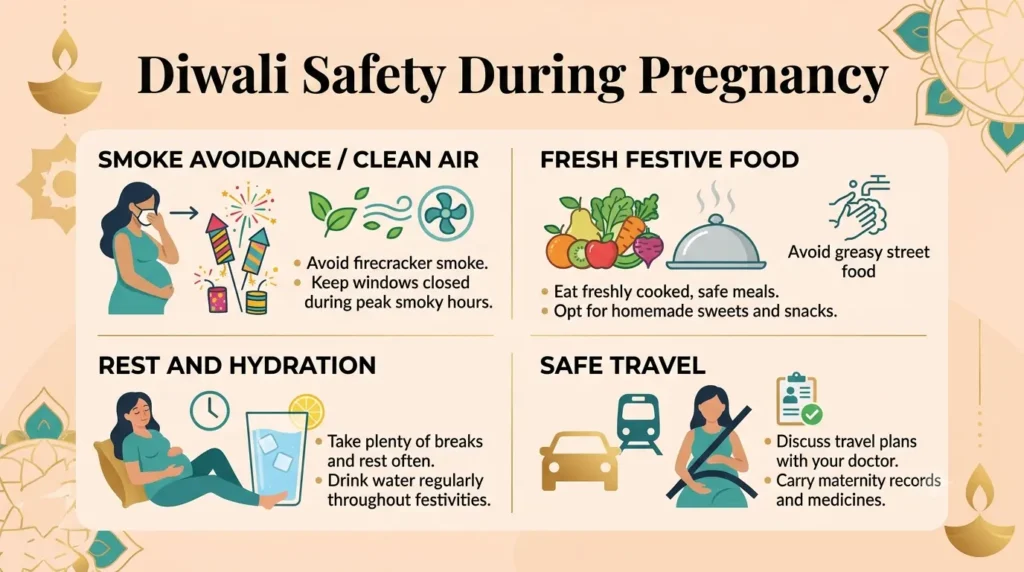
How Can I Celebrate Diwali Safely During Pregnancy?
Diwali | Festival Health

How Can I Celebrate Diwali Safely During Pregnancy?

Learn 10 Diwali safety tips during pregnancy, including firecracker smoke, festive food, travel and rest. Expert guidance from Dr. Sunita Choudhary, Jaipur.

3 Nov 2026
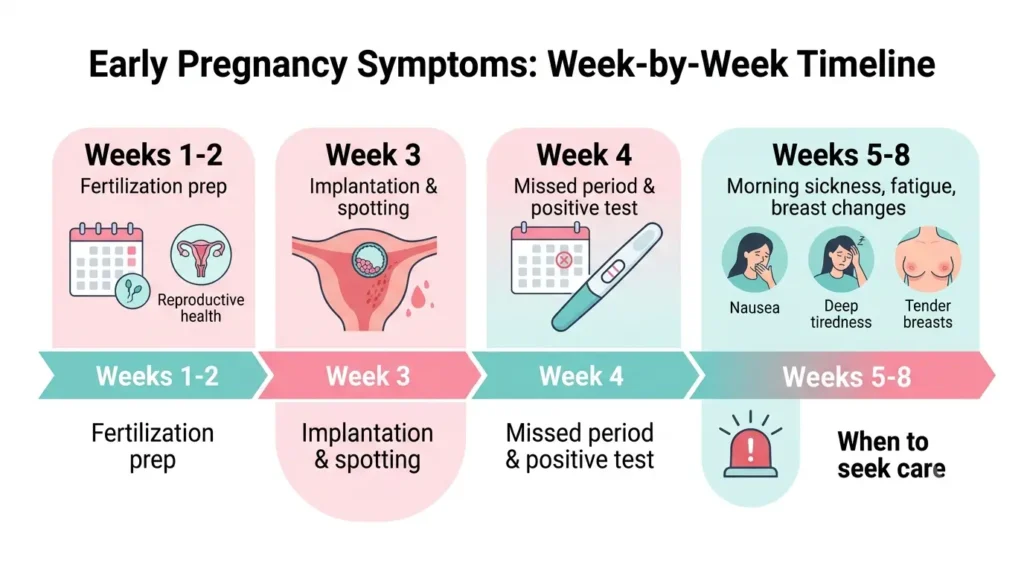
Early Pregnancy Symptoms: Week by Week
Early Pregnancy | First Trimester

Early Pregnancy Symptoms: Week by Week

The days around a missed period can be stressful. One moment you are checking a calendar, the next you are reading symptom lists and wondering what every twinge means. Online information can make this uncertainty worse. Many first-trimester symptoms are related to normal hormonal changes, but symptoms alone cannot confirm that a pregnancy is healthy or rule out a complication. This guide explains the usual timeline, pregnancy-test timing, spotting and discharge, practical symptom management, and warning signs that need medical assessment. At Blossom Women Wellness Clinic in Vaishali Nagar, Jaipur, Dr. Sunita Choudhary can discuss pregnancy confirmation, symptoms and antenatal-care planning. This article provides general health information. For early pregnancy care in Jaipur, book a consultation on +91 9928070006. Early Pregnancy Symptoms Week by Week Every pregnancy runs on its own timeline, but the following is a general guide. Symptoms and their timing vary from person to person. Weeks What Is Happening Possible Signs 1–2 Pregnancy is dated from the first day of the last menstrual period; ovulation often occurs around this part of the cycle Usually no pregnancy symptoms; basal body temperature may rise after ovulation 3 Fertilisation or implantation may occur, depending on cycle timing Often no symptoms; some people notice light spotting or mild cramps 4 The expected period may be due, and hCG may be detectable Missed period; a home pregnancy test may be positive 5–6 Pregnancy hormones continue to rise Nausea, fatigue, frequent urination or breast tenderness may begin 7–8 Early pregnancy symptoms may become more noticeable Food aversions, smell sensitivity, mood changes or ongoing nausea In Hindi: Pregnancy ke shuruaati lakshan mein period miss hona, thakan, breast tenderness ya nausea shamil ho sakte hain. Har mahila mein symptoms alag hote hain, aur kuch ko shuru mein koi khaas symptom nahi hota. Weeks 1–2: Understanding Pregnancy Dating Pregnancy weeks are counted from the first day of the last menstrual period. As a result, during weeks 1 and 2, conception has usually not yet occurred. Basal body temperature can rise after ovulation. If it remains elevated, this may be consistent with pregnancy, but temperature tracking cannot confirm pregnancy. A home pregnancy test used at the appropriate time is more useful for confirmation. Week 3: Fertilisation and Possible Implantation Around this stage, fertilisation and implantation may occur depending on the timing of ovulation. Many people notice nothing. Others may experience mild cramps or light spotting, but these symptoms can also occur for other reasons. Possible changes include: Light spotting: Pink or brown spotting is sometimes reported, but colour and duration cannot establish that it is implantation-related. Mild cramps: Light cramping can occur for several reasons and cannot reliably distinguish pregnancy from an approaching period. Discharge changes: Vaginal discharge varies throughout the menstrual cycle and is not a reliable way to diagnose pregnancy. Not having symptoms at this stage is common and does not, by itself, indicate a problem. Week 4: Missed Period and Pregnancy Testing Around the time your period is expected, a home pregnancy test may detect human chorionic gonadotropin (hCG), a hormone produced during pregnancy. A home pregnancy test is generally most reliable from the first day of a missed period. If you test early, first-morning urine may help because it is more concentrated. Follow the specific test instructions. Read our guide to using a pregnancy test kit correctly. If the result is negative but your period still has not arrived, repeat the test after a few days. Seek medical advice if your period remains absent or you have concerning symptoms. Weeks 5–8: Common Early Pregnancy Symptoms As pregnancy progresses, symptoms may become more noticeable. Some people experience several symptoms; others experience few. Morning sickness: Nausea with or without vomiting commonly begins around weeks 5–6, though timing varies. It can happen at any time of day. Fatigue: Hormonal changes and the body's adjustment to pregnancy can contribute to tiredness. Breast changes: Breasts may feel tender, heavy or swollen. Taste and smell changes: Some people notice a metallic taste, stronger sensitivity to smells or food aversions. Frequent urination: Hormonal changes and increased blood flow through the kidneys may increase the need to urinate. Nasal congestion: Some people experience nasal stuffiness during pregnancy. Mood changes: Hormonal changes, sleep disruption and the stress of early pregnancy can affect mood. Not feeling pregnant at 5 or 6 weeks? That can happen. The absence of symptoms alone does not establish whether a pregnancy is progressing normally. Antenatal assessment and any recommended scans or tests provide more useful information. See our antenatal checkup schedule. Implantation Bleeding vs Early Period vs Warning Bleeding Spotting around the time of an expected period can be confusing. However, bleeding patterns alone cannot confirm implantation or rule out a complication. Feature Light Spotting Menstrual Period Possible Ectopic Pregnancy Warning Timing May occur around the time of implantation or for other reasons Usually around the expected period Symptoms can develop in early pregnancy Colour and flow May be pink, brown or red; often light Flow varies and is usually similar to the person's usual period Bleeding can vary and may be light or irregular Duration Variable Often lasts several days May be persistent or intermittent Pain May occur with or without mild cramps Cramps may occur One-sided or severe pelvic pain can be a warning sign The appearance of bleeding cannot reliably establish its cause. Severe or one-sided abdominal or pelvic pain, shoulder-tip pain, fainting, collapse or significant dizziness — especially with bleeding — need emergency assessment. These can be signs of an ectopic pregnancy, in which a pregnancy develops outside the uterus. White Discharge in Early Pregnancy: What Is Normal? Thin, clear or milky-white discharge without a strong smell, itching or soreness can be normal during pregnancy. Discharge patterns also change throughout the menstrual cycle, so discharge alone cannot confirm pregnancy or show that a pregnancy is progressing normally. Contact a clinician if discharge comes with: Itching, burning or soreness A strong or unpleasant smell A change to green or grey discharge Pain, fever or bleeding Some infections are treatable during pregnancy, but the appropriate treatment depends on the cause. Avoid self-treating with medicines or vaginal products without advice from a qualified clinician. What to Avoid During Early Pregnancy Food-safety precautions and avoiding harmful substances can help reduce preventable risks during pregnancy. Food and drink Avoid raw or undercooked meat, seafood and eggs. Avoid unpasteurised milk and products made with unpasteurised ingredients. Follow local pregnancy guidance on high-mercury fish. Keep total caffeine intake below 200 mg per day, unless your clinician advises otherwise. Caffeine content varies by drink and serving size. Wash fruits and vegetables thoroughly and follow safe food-handling practices. Substances and medicines Avoid alcohol during pregnancy; no safe amount has been established. Avoid smoking and nicotine products. Check prescription medicines, over-the-counter medicines and herbal supplements with a clinician or pharmacist. Do not abruptly stop a prescribed medicine without medical advice. Environment and heat Seek pregnancy-specific advice about hot tubs, saunas and activities that substantially raise core body temperature. Avoid handling cat litter if possible. If you must handle it, use gloves and wash your hands afterwards. Take care around pesticides and harsh chemical solvents; follow product safety guidance and ask a clinician about specific exposures. For more food-related guidance, read our article on fruits during pregnancy. Managing Common First-Trimester Symptoms Morning sickness Try small, frequent meals rather than allowing your stomach to remain empty for long periods. Keep a simple snack nearby if eating before getting out of bed helps. Sip fluids regularly. Avoid foods or smells that trigger nausea when possible. Ask a clinician or pharmacist before using medicines, supplements or concentrated herbal products for nausea. If vomiting prevents you from keeping fluids down, or you have very little urine, marked weakness or dizziness, seek prompt medical advice. Fatigue Take short rest breaks during the workday where possible. Drink water regularly and eat balanced meals. Prioritise sleep and ask for help with non-essential tasks. Discuss persistent or severe fatigue with your clinician, who may assess for anaemia or other causes. Mood changes and anxiety Talk with someone you trust about worries or uncertainty. Gentle activity, breathing exercises and adequate rest may help. Limit repeated online symptom searches if they increase anxiety. Contact your healthcare team if anxiety is persistent, overwhelming or affecting daily life. Symptoms can fluctuate from day to day. A change in nausea alone cannot diagnose miscarriage or confirm that everything is fine. If symptoms change alongside bleeding or significant pain, contact a clinician promptly. Warning Signs: When to Seek Medical Care Seek emergency medical assessment for: Heavy vaginal bleeding, particularly with severe abdominal or pelvic pain, weakness or dizziness. Severe or one-sided abdominal or pelvic pain. Shoulder-tip pain, fainting, collapse or significant dizziness, especially if pregnancy is possible. Severe pain or bleeding accompanied by feeling faint or very unwell. Contact a clinician promptly for: Fever or chills. Pain or burning while passing urine. Unusual discharge with a strong smell, itching or soreness. Repeated vomiting or difficulty keeping fluids down. Symptoms that are severe, persistent or concerning to you. These symptoms do not always mean a pregnancy complication, but they should not be ignored. Do not delay emergency care while waiting for a home pregnancy test if you have severe pain, fainting or heavy bleeding. What to Do After a Positive Pregnancy Test A positive home pregnancy test is a good reason to arrange antenatal care. Consider these steps: Discuss folic acid. A commonly recommended dose for people at average risk is 400 micrograms daily, starting before conception when possible and continuing in early pregnancy. Some people need a different dose based on their medical history, so confirm the appropriate dose with your clinician. Review your medicines. Make a list of prescription medicines, over-the-counter products and supplements, and ask a clinician or pharmacist whether they are suitable during pregnancy. Do not stop essential prescribed treatment without advice. Arrange your first antenatal visit. Your clinician can advise when to attend, based on your last menstrual period, symptoms and medical history. Discuss any warning signs. Pain, bleeding, fainting or other concerning symptoms may require assessment sooner than a routine appointment. Read our antenatal checkup schedule guide for more information about pregnancy visits and tests. Later in pregnancy, you can also discuss birth options with your healthcare team; our normal delivery and painless delivery guide introduces some topics to discuss. Guidance Referenced ACOG — American College of Obstetricians and Gynecologists: Patient resources on early pregnancy and morning sickness: acog.org WHO — World Health Organization: Recommendations on Antenatal Care for a Positive Pregnancy Experience: who.int FOGSI — Federation of Obstetric and Gynaecological Societies of India: Clinical practice guidance: fogsi.org Individual symptoms and schedules depend on your clinician's assessment of your specific pregnancy. Early Pregnancy Care in Vaishali Nagar, Jaipur Have you received a positive pregnancy test, or are you unsure whether your symptoms fit the usual pattern? You can contact Dr. Sunita Choudhary at Blossom Women Wellness Clinic to discuss pregnancy confirmation, symptoms and antenatal-care planning. Learn more about our pregnancy and maternity care services. Address: Gate 4, 10A, Shiv Path, near SDC Aishwarya Heights, Nand Vihar Colony, Nemi Nagar Extension, Block A, Vaishali Nagar, Jaipur 302021 Call / WhatsApp: +91 9928070006 Consultations available in: English and Hindi This article provides general medical information only and does not constitute a formal diagnosis or personalised treatment plan. For individual medical advice, please schedule a consultation. Dr. Sunita Choudhary MBBS, MS (Obstetrics & Gynaecology), FOGSI Member Senior Consultant Gynecologist & Obstetrician Blossom Women Wellness Clinic, Vaishali Nagar | Shalby Multi-Speciality Hospital, Jaipur

30 Oct 2026
Common questions

Frequently asked questions

What are the top 5 causes of female infertility?
Female infertility causes are commonly grouped into five major categories: ovulatory dysfunction (with PCOS a common cause), tubal factors (blocked or damaged fallopian tubes), uterine factors such as fibroids or polyps, endometriosis, and the age-related decline in egg quantity and quality. How much each contributes varies between populations.
My periods are regular, why am I not getting pregnant?
Regular periods usually mean regular ovulation, but conception also needs open tubes, healthy sperm and a receptive uterus. Male factors, alone or alongside female factors, are estimated to be involved in roughly half of couples, which is why both partners are usually evaluated together.
How long should a couple try to conceive before seeing a doctor?
Twelve months if the woman is under 35, six months if she is 35 or older, and sooner if cycles are irregular, PCOS or endometriosis is known, or there is a history of pelvic infection.
How can a woman know if she has fertility problems?
There is no single outward sign and no fixed test package. Evaluation is tailored to each woman's history, symptoms and examination, it may include AMH and an antral follicle count, selected hormone blood tests, a pelvic ultrasound, and an HSG if the tubes need checking, plus a semen analysis for the partner.
What is the AMH test?
AMH (anti-Müllerian hormone) is a blood test that helps estimate the ovarian egg reserve and can help predict how the ovaries will respond to stimulation treatment. It does not measure egg quality and cannot, by itself, predict whether or when a woman will conceive naturally.
Is the HSG test painful?
HSG causes short-lived cramping similar to period pain while the dye passes through the tubes. It is done after the period ends and before ovulation, and takes only a few minutes.
Can female infertility be treated?
Treatment options exist for many causes of female infertility, though outcomes vary from person to person and in some couples no specific cause is found. Many couples do go on to conceive, some with lifestyle changes and medicines, others with IUI or IVF, and some simply with time.

Have a question about your health?

Dr. Sunita answers on WhatsApp - warm, unhurried, in your language. Same-week appointments available.