PCOD Symptoms, Causes and Care: A Practical Guide for Women
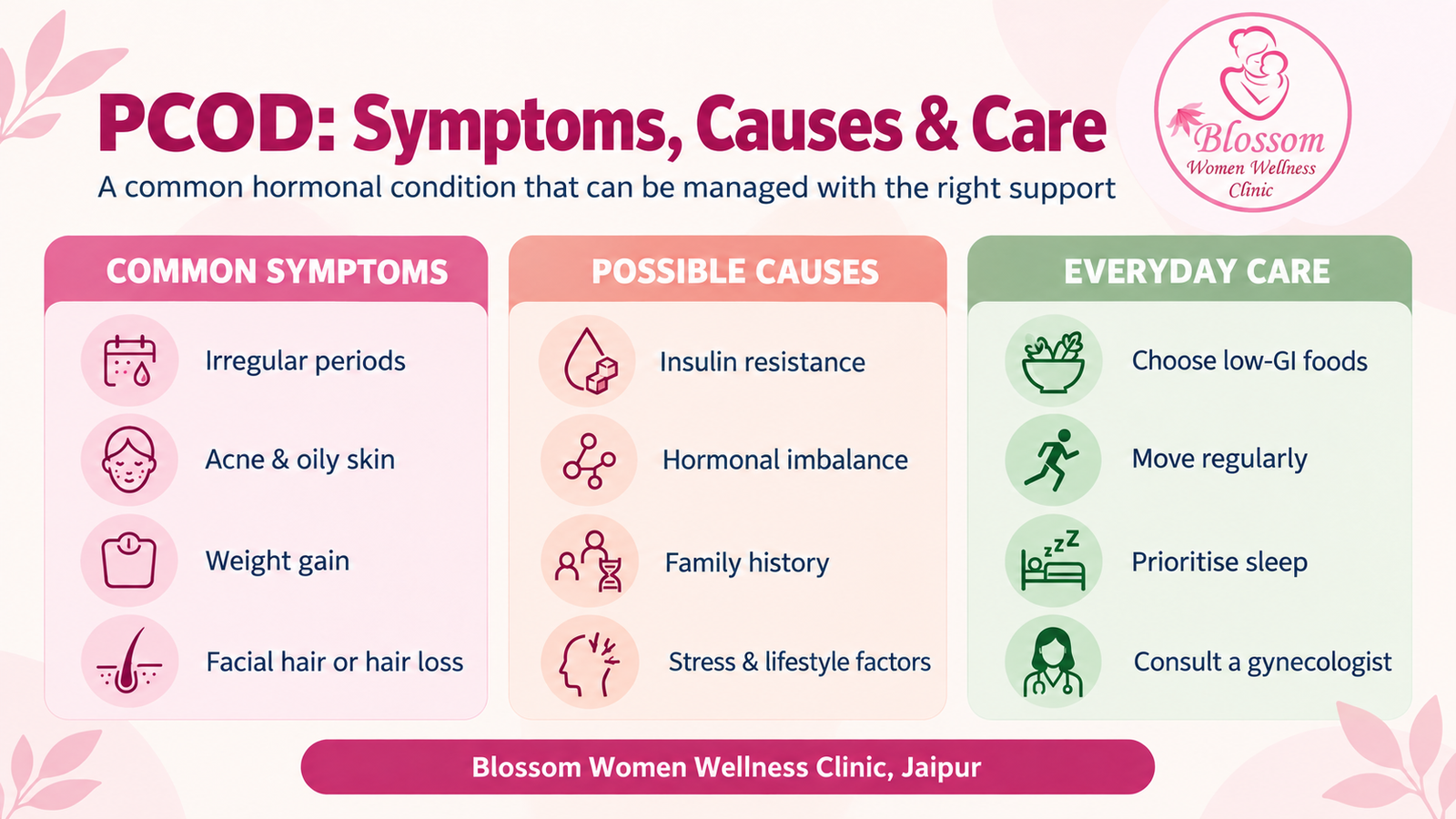
Somewhere in your twenties, your periods stopped keeping appointments. They arrive weeks late, or not at all, and nobody can tell you why. Meanwhile the acne along your jawline has outlasted every cream you were promised would work, the weight has settled around your middle and refuses to leave no matter how little you eat, and a relative has started asking The Question about children. Then an ultrasound report mentions "polycystic ovaries", and a late-night search leaves you convinced your fertility is in danger.
Here is the calmer truth: PCOD (Polycystic Ovarian Disease) is one of the most common hormonal conditions in women, affecting roughly 10 to 15% of women of reproductive age. It is not a disease that ruins your life; it is a hormonal pattern, and one that responds more to your daily habits than to anything else. Managing a PCOD problem well comes down to three things: understanding what is happening inside your body, recognising the symptoms early, and applying targeted lifestyle changes alongside clinical care.
PCOD se ghabrana nahi hai. It is not a verdict on your health or your motherhood, it is a signal that your routine needs adjusting, and your routine is the one thing you control.
At Blossom Women Wellness Clinic in Jaipur, Dr. Sunita Choudhary, Sr. Consultant Gynecologist with more than 15 years of experience, treats PCOD at almost every week of her clinic schedule, because it is one of the few hormonal conditions where what you do every single day genuinely changes the outcome. This guide explains PCOD in plain language, the ovaries, the symptoms, the causes, the diagnosis and the treatment, without the frightening claims.
This is general information, not a medical opinion for your specific case. For a personalised consultation, book on +91 9928070006 or visit Blossom Women Wellness Clinic, Vaishali Nagar.
What is PCOD?
PCOD (Polycystic Ovarian Disease) is a hormonal condition in which the ovaries release immature or partially mature eggs instead of a mature one each month, driven by mild imbalances in hormones such as LH and androgens. The unreleased eggs form tiny cysts along the outer edge of the ovaries, and ovulation becomes irregular, which is why the most visible PCOD symptoms are irregular periods, acne and weight changes. Affecting roughly 10 to 15% of women of reproductive age, it is one of the most common hormonal conditions in Indian women.
What happens in the ovaries during PCOD?
During a normal menstrual cycle, your ovaries recruit a handful of follicles, one of which matures and releases an egg each month. That release is ovulation, and it is driven by a finely tuned balance of hormones from the brain and the ovary.
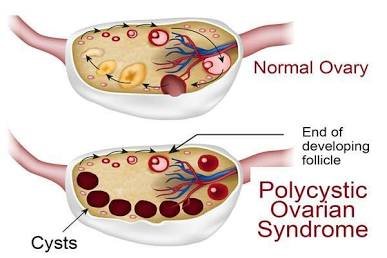
In PCOD, subtle hormonal shifts, mildly raised luteinizing hormone (LH) and higher levels of male hormones (androgens), interrupt this choreography. The eggs that month do not fully mature, so ovulation is delayed or skipped. Over time, these unreleased eggs accumulate as tiny fluid-filled sacs (cysts) along the outer edge of the ovaries, which is the "string of pearls" your radiologist sees on ultrasound. The ovaries enlarge, ovulation becomes irregular, and everything downstream, your cycle, your skin, your weight, follows.
Two reassuring notes: the name is misleading, because many women with PCOD have few or no visible cysts; and having cysts on an ultrasound does not automatically mean you have the condition. PCOD is a pattern of hormones and cycles, not just a picture on a scan.
PCOD symptoms: a checklist
Symptoms vary from woman to woman, and you do not need all of them. The common PCOD symptoms are:
- Irregular menstrual cycles. Delayed periods, infrequent periods (oligomenorrhea), or prolonged, unpredictable flow.
- Weight fluctuations. Unexplained weight gain, particularly around the abdomen, and difficulty losing weight despite genuine effort.
- Skin and hair changes. Jawline acne, oily skin, thinning hair on the scalp, and unwanted facial or body hair (hirsutism).
- Fertility concerns. Irregular ovulation can make conception take longer, although most women with PCOD do conceive with the right support.
- Mood and energy changes. Fatigue, low mood, anxiety and poor sleep, which are often overlooked in routine check-ups.
If two or more of these feel familiar, it is worth getting a proper evaluation rather than guessing.
What causes PCOD?
There is no single cause. PCOD causes usually combine genetics, lifestyle and hormones:
- Insulin resistance. Cells respond less effectively to insulin, so the body compensates with more insulin. Higher insulin drives the ovaries to produce more androgens, worsening cycles, acne and weight gain.
- Low-grade inflammation. Chronic, low-grade inflammation is associated with PCOD and may stimulate the ovaries to produce androgens.
- Genetics. PCOD often runs in families; a mother or sister with the condition increases the likelihood.
- Lifestyle factors. A high-glycemic diet, low physical activity, chronic stress and poor sleep amplify the underlying hormonal tendency.
PCOD or PCOS: what is the difference?
The terms are used interchangeably in casual conversation, but they are not identical. PCOD is a metabolic-endocrine condition in which the ovaries release immature eggs; it is generally less severe and largely manageable through lifestyle modification. PCOS (Polycystic Ovary Syndrome) is a broader metabolic disorder with more pronounced systemic effects on metabolism, hormones and long-term health. Our detailed What is PCOS? guide covers the full breakdown, including diagnostic criteria and long-term risks.
How is PCOD diagnosed?
There is no single blood test for PCOD. Healthcare providers combine your history, examination and targeted investigations:
- Pelvic ultrasound (USG). Looks for enlarged ovaries with the characteristic string-of-pearls follicle pattern.
- Hormonal panel. Measures free and total testosterone, LH, FSH, DHEA-S and fasting insulin.
- Metabolic profiling. Assesses HbA1c, fasting lipids and glucose tolerance, because PCOD is as much a metabolic condition as a gynecological one.
Bring your cycle history to the appointment, how many periods you have had in the last six months is genuinely useful diagnostic information.
PCOD treatment: lifestyle first, medicines when needed
Comprehensive PCOD treatment aims at three goals: restoring hormonal balance, restoring regular ovulation, and protecting your long-term metabolic health. At Blossom Clinic, our PCOS & Hormonal Health Services focus on a lifestyle-first approach, food and routine first, medicines only where they are genuinely needed.
1. Lifestyle and diet: the real treatment
- Nutrient-dense diet. Build meals around low-glycemic, anti-inflammatory whole foods, leafy greens, dals, lean proteins, high-fiber grains. Our PCOD diet guide covers the same principles in detail, with meal plans and food lists you can follow.
- Physical activity. The best exercises for PCOD are the ones you sustain: around 150 minutes of moderate aerobic activity a week, brisk walking, cycling or swimming, plus resistance training, which measurably improves insulin sensitivity, the root of the problem.
- Stress management and sleep. Seven to eight hours of quality sleep helps stabilise cortisol; chronic stress and sleep deprivation quietly worsen the entire hormonal picture.
2. Medicines, when needed
When lifestyle changes need additional support, physicians may prescribe targeted therapies:
- Cycle regulation. Combined oral contraceptives or progestin therapy to bring regularity to menstrual cycles.
- Insulin sensitizers. Metformin to address the underlying insulin resistance and improve metabolic health.
- Androgen blockers. Medications such as spironolactone for hirsutism and severe acne.
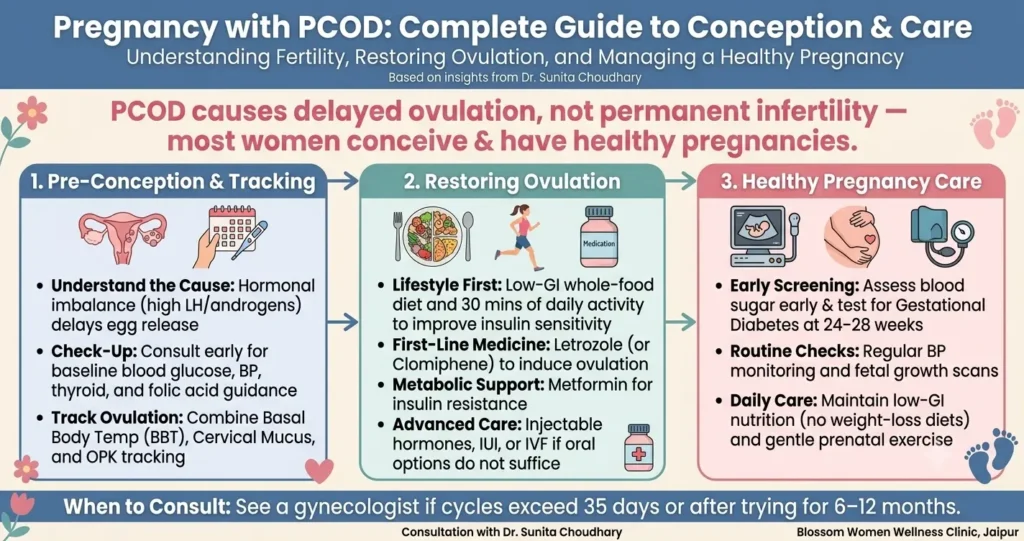
- Ovulation induction. Letrozole or clomiphene citrate for women actively planning pregnancy, our pregnancy with PCOD guide covers that full journey step by step.
Medicines manage the symptoms; lifestyle addresses the root. The women who do best long-term usually do both, with the medicines stepping down as the lifestyle results arrive. And when conception becomes the goal, our fertility & IUI programme takes over exactly where ovulation induction leaves off.
Free Resource for Jaipur Women
Confused about what to eat for PCOD? Download our free PCOS & PCOD Indian Diet Chart (PDF), practical, local North Indian meal plans, low-GI swaps, and dining-out tips. Click here to receive it on WhatsApp.
The bottom line
PCOD is common, it is not your fault, and it is one of the most treatable hormonal conditions in women’s health. Understand your cycle, get a proper diagnosis instead of guessing, eat low-glycemic whole foods, move your body most days, protect your sleep, and use medicines where they genuinely help. Do these things consistently and PCOD becomes a managed background condition, not the centre of your life.
Hormonal balance is easiest to rebuild when it is planned early, not corrected late. If your cycles have been irregular for months, a single consultation can map out your diagnosis, diet and treatment plan.
Looking for an experienced female gynecologist in Jaipur for PCOD treatment? Book a consultation with Dr. Sunita Choudhary at Blossom Women Wellness Clinic, Vaishali Nagar. Call or WhatsApp +91 9928070006; same-week appointments are usually available, and you will leave with a plan, not just a prescription.
Dr. Sunita Choudhary
Sr. Consultant Gynecologist & Obstetrician
Blossom Women Wellness Clinic, Vaishali Nagar | Shalby Multi-Speciality Hospital, Jaipur
This article is general health education, not personalised medical advice. For guidance specific to your case, book a consultation on +91 99280 70006 or message on WhatsApp.