What is PCOS? Symptoms & Causes
Something has been feeling off with your body for a while now. Periods that arrive whenever they feel like it, or not at all. Acne that came back in your twenties. Weight that settles around your lower belly and refuses to move no matter what you try (the stubborn “PCOS belly” so many women search for), or hair appearing where you do not want it. A late-night search of these symptoms probably threw up the letters PCOS, along with some genuinely frightening claims about infertility. Before you spiral, take a breath.
If you have been typing “PCOS kya hai” or “PCOS meaning in Hindi” into Google at 2 am, you are asking exactly the right question, and here is the reassuring answer: PCOS (polycystic ovary syndrome) is one of the most common hormonal conditions in women, and it is very manageable. It is not a disease you catch, and it is not your fault. It is a pattern of hormonal imbalance that responds well to the right combination of lifestyle changes and, when needed, medical treatment. Understanding what is actually happening inside your body is the first step to taking charge of it.
At Blossom Women Wellness Clinic in Jaipur, we meet women every week who have lived with undiagnosed symptoms for years, often after being told to simply “lose some weight”. Dr. Sunita Choudhary, Sr. Consultant Gynecologist with more than 15 years of experience, believes a woman who understands her own condition makes better decisions about her health. This guide explains PCOS in plain language: what it is, why it happens, how it is diagnosed, and how to treat PCOS symptoms effectively.
This is general information, not a medical opinion for your specific case. For a personalised consultation, book on +91 9928070006 or visit Blossom Women Wellness Clinic, Vaishali Nagar.
What is PCOS? (And what is the PCOD full form?)
PCOS stands for Polycystic Ovary Syndrome. Despite the name, it is not primarily a problem with cysts, and it is not only an ovarian problem. It is a syndrome, which means a collection of signs and symptoms that occur together, driven mainly by two things: hormones called androgens (often described as “male hormones”, although women naturally produce small amounts of them) and insulin resistance.
You will also hear the term PCOD, whose full form is Polycystic Ovarian Disease. In India the two labels are used almost interchangeably, but doctors treat them as related yet distinct: PCOD generally describes a milder hormonal imbalance where the ovaries release partially mature or immature eggs, while PCOS is a broader metabolic condition in which insulin resistance and higher androgen levels affect the whole body, not just the ovaries. The distinction matters because the treatment plans differ, and it is one your gynecologist will clarify with proper testing. Roughly 1 in 5 Indian women of reproductive age may have PCOS or PCOD, which makes these among the most common hormonal conditions gynecologists see.
PCOS kya hai? (PCOS meaning in Hindi)
PCOS का पूरा नाम Polycystic Ovary Syndrome है, जिसे हिंदी में पॉलीसिस्टिक ओवरी सिंड्रोम कहा जाता है। आसान भाषा में, यह अंडाशय (ovaries) की एक हार्मोनल स्थिति है जिसमें हार्मोन का संतुलन बिगड़ जाता है, अंडाणु नियमित रूप से बाहर नहीं निकल पाते, और अंडाशय में छोटी-छोटी रसौलियाँ (follicles) दिखाई देती हैं। यह कोई संक्रामक बीमारी नहीं है, और सही देखभाल से इसे पूरी तरह नियंत्रित किया जा सकता है।
What actually happens in your ovaries?
In PCOS, the ovaries often fail to mature and release an egg each month, so ovulation becomes irregular or stops, and that is what makes periods irregular. In a regular cycle, the ovaries nurture several tiny fluid-filled sacs called follicles, one of which matures and releases an egg mid-cycle. This release is ovulation, and it triggers a predictable period about two weeks later. In PCOS, the hormonal balance needed for this process is disturbed: follicles start to develop but never mature enough to release an egg.
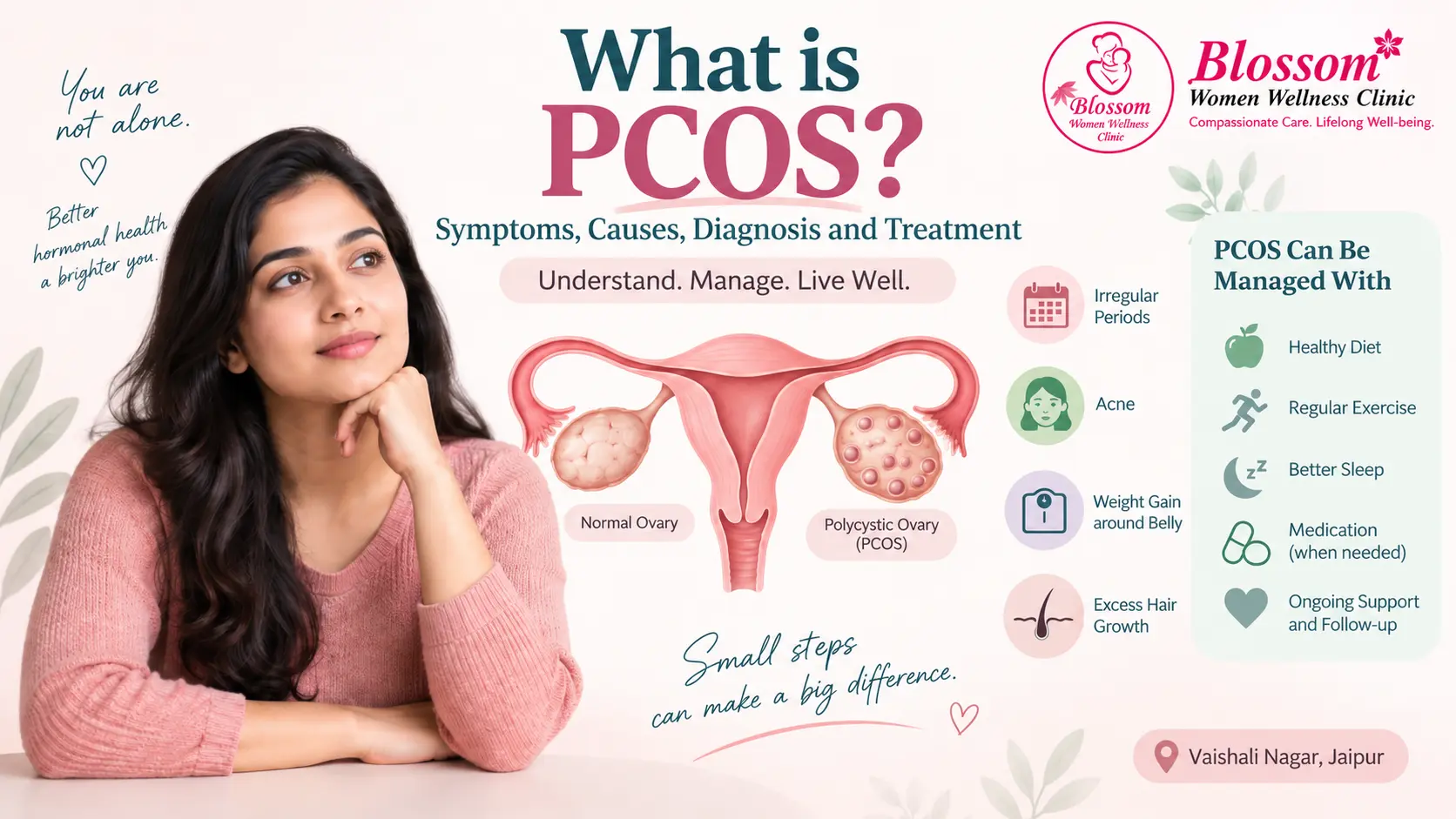
On an ultrasound, the ovaries can show a ring of these small immature follicles, which is where the name “polycystic” comes from. These are not true cysts and they do not need to be removed; you can also have PCOS without this ultrasound appearance at all. Because ovulation is irregular, the uterine lining builds up over months and sheds unpredictably, causing missed periods, very long cycles, or episodes of prolonged and sometimes heavy bleeding.
Common symptoms of PCOS
The most common symptoms of PCOS are irregular or missed periods, weight gain around the belly, persistent acne, excess facial or body hair, and changes in mood and energy. No two women have identical symptoms, and severity varies widely, but these are the ones gynecologists see most often:
Irregular or missed periods
Cycles longer than 35 days, fewer than 8 periods a year, or bleeding that arrives without warning. This is usually the symptom that brings women to a doctor first.
PCOS belly: weight gain around the waist
Insulin resistance makes the body store fat more readily around the lower abdomen (the classic “PCOS belly”), and it also makes that fat harder to lose. This is a metabolic effect of the condition, not a failure of willpower.
Acne and skin changes
Jawline and chin acne that persists into adulthood, unusually oily skin, or dark, velvety patches of skin on the neck, underarms or groin (a condition called acanthosis nigricans, which is often a visible sign of insulin resistance).
Excess facial or body hair, and scalp hair thinning
Higher androgen levels can cause thicker, darker hair on the upper lip, chin, chest or abdomen, and at the same time thin the hair at the scalp parting. The medical term for excess hair growth is hirsutism.
Mood changes and fatigue
Many women with PCOS report fatigue, low mood and anxiety. These are not “in your head”; fluctuating hormones, insulin problems and the stress of physical symptoms combine to make mood changes a recognised part of the condition, and they are taken seriously at our clinic.
What causes PCOS?
PCOS is caused by a combination of genetic factors, insulin resistance and hormonal imbalance; researchers have not identified any single cause. These three factors work together:
Insulin resistance
In most women with PCOS, the body’s cells respond less effectively to insulin, the hormone that moves glucose out of the blood. To compensate, the body produces more of it, and higher insulin levels push the ovaries to produce more androgens. This single mechanism explains much of the condition: the irregular ovulation, the acne, the hair changes and the weight gain.
Hormonal imbalance
Many women with PCOS have a higher ratio of LH to FSH, two pituitary hormones that regulate the cycle, along with raised androgens. This mix further disrupts ovulation.
Genetics
PCOS tends to run in families. If your mother or sister has it, your likelihood of having it is higher. The genes involved influence insulin action and androgen production.
How is PCOS diagnosed?
There is no single blood test or scan that confirms PCOS. Doctors worldwide, following the Rotterdam criteria, generally diagnose it when at least two of these three are present (after ruling out other conditions):
- Irregular or absent ovulation, usually seen as irregular or missed periods
- Clinical or blood evidence of high androgens (excess hair, acne, or raised levels on testing)
- The typical polycystic appearance of the ovaries on ultrasound
The rule-out process matters, because several other conditions can mimic PCOS. Since a missed period can simply be an early pregnancy (early symptoms of pregnancy can look very similar to a delayed PCOS cycle), a pregnancy test usually comes first. Thyroid disorders and elevated prolactin are checked with blood tests, and in women in their forties, perimenopause (the years before menopause) can also make cycles irregular. Very rarely, an abnormal pregnancy growth called a molar pregnancy can cause missed periods with a positive test; a simple ultrasound and blood test rules it out quickly.
Alongside hormone tests, your doctor may check fasting glucose, insulin, and cholesterol, because these reveal the insulin resistance driving the condition. This is why self-diagnosis from internet checklists is not reliable. If your cycles have been irregular for three months or more, a consultation and a short set of tests will give you a clear answer.
How to treat PCOS symptoms: lifestyle and medical care
PCOS is treated with lifestyle changes first (food, movement, sleep), with medicines added when needed; there is no permanent cure, but symptoms respond remarkably well to treatment. Whatever your reports say, treatment for polycystic ovaries starts with the same foundation: lifestyle.
Food: a PCOS healthy diet
Dieting with PCOS does not mean eating less; it means eating smarter. A balanced, low glycaemic index (low-GI) diet steadies insulin, and steadier insulin means quieter symptoms. You do not need exotic foods; regular Indian meals, adjusted, work well. We cover this in detail in our PCOS diet guide, which includes a 7-day Indian meal plan.
Movement: the PCOS workout that works
An effective PCOS workout is not about punishing gym sessions. Aim for at least 150 minutes a week of moderate activity such as brisk walking, cycling or swimming, plus two sessions of strength training. Muscle improves how your body handles insulin, which directly targets the root problem.
Sleep and stress
Poor sleep and chronic stress both raise insulin resistance and cravings. Seven to eight hours of sleep and a stress habit you actually keep (yoga, walking, anything sustainable) are treatment, not luxury.
Medical treatment, when needed
Depending on your goals, treatment may include pills to regulate cycles, metformin to improve how your body handles insulin, skin and hair treatments, or ovulation-inducing medicines when you are planning a pregnancy. Treatment is always personalised to your symptoms and priorities.
PCOS and pregnancy: can you conceive?
Yes, most women with PCOS can and do conceive, though it may take longer because ovulation is irregular. This is the fear that brings most women to our clinic, so let us say it plainly: a PCOS diagnosis is far from a barrier to motherhood, and where help is needed, it usually works.
Even a 5 to 10 percent reduction in body weight restores regular ovulation in many women, which is why lifestyle advice comes before fertility medicines. When medicines are needed, ovulation induction tablets help a large number of women conceive, and advanced treatments like IVF are only rarely required. Pregnancy with PCOS can carry a slightly higher chance of gestational diabetes and blood pressure problems, so early antenatal care is advised; with proper monitoring, outcomes are good.
What is the best age to get pregnant with PCOS?
There is no single “best age”, and there is no need to panic about your age. Fertility declines gradually for all women after 35, whether or not they have PCOS; what matters more with PCOS is how well the condition is managed. Women who keep their weight, insulin and cycles in check conceive successfully through their twenties and thirties. If you have PCOS and are planning pregnancy, especially in your later thirties, consult a gynecologist early rather than waiting a full year; early support makes a real difference.
When should you see a gynecologist?
See a gynecologist if your periods have been persistently irregular, your symptoms are getting worse, or you are struggling to conceive. Book a consultation if:
- Your periods come fewer than 8 or 9 times a year, or your cycles are consistently longer than 35 days
- Your cycle pattern has changed suddenly
- Acne or facial hair is worsening despite your usual care
- You are under 35 and have been trying to conceive for 6 months or more without success
- You notice dark, velvety skin patches on your neck or underarms
The bottom line
PCOS is common, it is understandable, and it is manageable. Whether your reports say PCOS or PCOD, it is not a verdict on your fertility or your future. The combination of steady food, regular movement, good sleep and targeted medical care controls this condition for the vast majority of women, and the earlier you start, the easier it gets. Thousands of women with PCOS have regular cycles, healthy pregnancies and full lives; what made the difference was simply getting a diagnosis and a plan.
A PCOS diagnosis is not the end of your plans for a family or a healthy life. It is a signal to start managing your health with a proper plan, and you do not have to make that plan alone.
If your cycles have been irregular or anything in this article feels familiar, book a consultation with Dr. Sunita Choudhary at Blossom Women Wellness Clinic, Vaishali Nagar. Call or WhatsApp +91 9928070006; same-week appointments are usually available, and you will leave with a plan, not just a prescription.
— Dr. Sunita Choudhary
Sr. Consultant Gynecologist & Obstetrician
Blossom Women Wellness Clinic, Vaishali Nagar | Shalby Multi-Speciality Hospital, Jaipur
This article is general health education, not personalised medical advice. For guidance specific to your case, book a consultation on +91 99280 70006 or message on WhatsApp.