
First Trimester of Pregnancy: Weeks 1 to 12 Explained
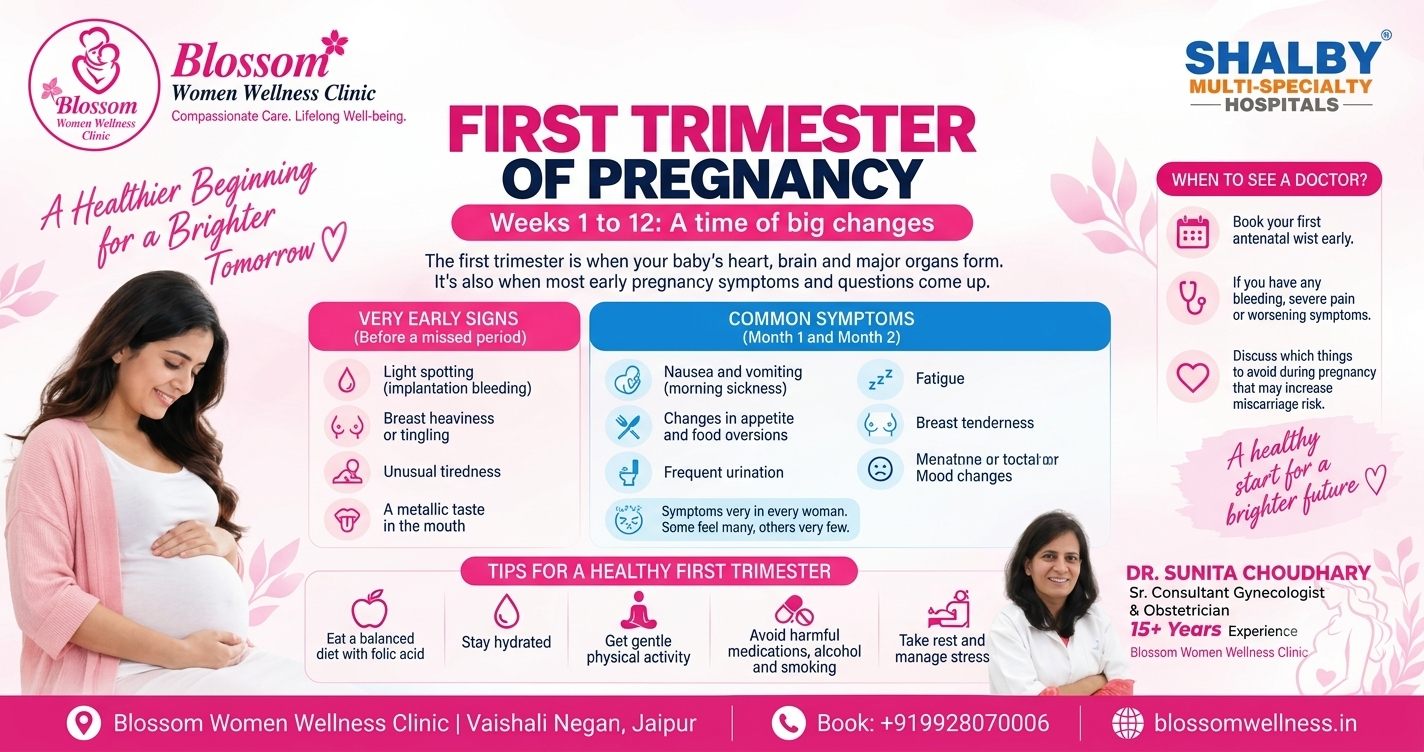
Two pink lines. Ten different emotions before breakfast: joy, disbelief, excitement, and about forty questions, most of them starting with “is this normal?”. The first trimester, weeks 1 to 12, is the most intense transformation your body will go through, and almost everything about it happens quietly, before you look or feel pregnant to anyone else.
It is also the phase when the foundations are laid. Your baby’s heart, brain, spine and major organs all form in these twelve weeks, which is exactly why early care pays off more than anything you do later. And it is the phase women Google most at 2 am. Understanding the physical symptoms of the first trimester helps relieve unnecessary anxiety, so this guide answers the big questions properly: which symptoms are normal month by month, what the very early signs of pregnancy feel like, and which warning signs need a doctor immediately.
At Blossom Women Wellness Clinic in Jaipur, Dr. Sunita Choudhary, Sr. Consultant Gynecologist with more than 15 years of experience, meets women every week who spent their first trimester anxious and overloaded with advice from the internet and the family WhatsApp group. This guide gives you the plain-language version: what happens week by week, what you actually need to do, and which signs should never be ignored.
This is general information, not a medical opinion for your specific case. For a personalised consultation, book on +91 9928070006 or visit Blossom Women Wellness Clinic, Vaishali Nagar.
What weeks are the first trimester?
The first trimester runs from week 1 to the end of week 12, and in many clinics including ours it is extended to week 13. These twelve weeks are divided into the embryonic stage, when the tiny cluster of cells becomes an embryo with a beating heart and forming organs, and the beginning of the fetal stage from about week 10, when the structure of the body is complete and growth accelerates. The screening scan for this trimester (the NT scan) is done between weeks 11 and 13.
How pregnancy weeks are counted
Pregnancy is counted from the first day of your last menstrual period, not from the day you conceived. Conception typically happens around week 2, which means when you test positive, you are usually already about 4 weeks along. If your cycles are irregular or you are unsure of your dates, an early ultrasound is the most accurate way to date the pregnancy. If you have not confirmed the pregnancy yet, our pregnancy test kit guide explains exactly how to test and what a faint line means.
Very early signs of pregnancy: the first week and the first 72 hours
Let us start with the honest answer to the most-searched question in early pregnancy: can you feel pregnant in the first week, or within 72 hours of conceiving? Usually not. In the first three days after conception, the embryo is still a ball of cells travelling towards the uterus and has not yet started producing pregnancy hormone (hCG), which is what causes symptoms. There are no reliable “3 days pregnant symptoms”, however convincingly the internet describes them.
The earliest genuine signs appear around implantation, 6 to 12 days after ovulation, when the embryo settles into the uterine lining and hCG production begins:
- Light spotting for a day or two, often mistaken for an early period
- Breast changes: heaviness, tingling or tenderness
- Unusual tiredness that sleep does not fix
- Mild cramping that feels like a period about to start, but does not arrive
- A metallic taste in the mouth and new sensitivity to smells
- Bloating and mood changes that feel very much like PMS
These are the “hidden pregnancy signs” women describe: because they overlap so much with normal premenstrual symptoms, a pregnancy can go unnoticed for weeks. The positive signs of pregnancy are clearer: a missed period together with a positive home test, and later, a pregnancy confirmed on ultrasound. If you are testing around your missed period, our pregnancy test kit guide explains how to test correctly and what a faint line means.
Symptoms in first trimester, week by week
| Weeks | Common for you | Baby |
|---|---|---|
| 1 to 4 (month 1) | Missed period, mild cramping, possible light implantation spotting, early fatigue | A ball of cells implants in the uterus |
| 5 to 8 (month 2) | Nausea (any time of day), sore and heavy breasts, extreme tiredness, frequent urination, food aversions, mood swings | Heart starts beating around week 6; arms, legs and facial features form |
| 9 to 12 (month 3) | Nausea eases for many, appetite returns, constipation, visible veins, emotional ups and downs | Officially a fetus; all major organs formed |
First month of pregnancy symptoms (weeks 1 to 4)
The first month is quiet. Many women feel only a missed period with mild cramping or spotting, and some feel nothing at all; the hormonal surge that drives classic symptoms is only beginning.
Second month pregnancy symptoms (weeks 5 to 8)
This is when first trimester symptoms peak. Nausea (which, despite the name “morning sickness”, can last all day), strong food aversions, a sense of smell like a bloodhound’s, breasts too tender for your usual bra, and exhaustion that makes the afternoon feel like midnight. All of it is hormonal and, unpleasant as it is, a sign that the pregnancy is progressing well.
Third month (weeks 9 to 12)
For most women, nausea begins to ease and appetite returns. Constipation and visible veins are common, and emotions may swing for a few more weeks. By the end of this month, your booking scans are done and you can usually share the news with the world.
No two pregnancies are identical. Some women are barely nauseated and fully energetic; others feel unwell all day for weeks. Both can be completely healthy pregnancies, and a baby with a good heartbeat at your first scan is far more reassuring than any symptom checklist.
When should you book your first antenatal appointment?
As soon as your test is positive. The ideal first visit falls around 6 to 8 weeks, and you do not need to wait for a “right week” or for the nausea to settle. At this visit you can expect a dating scan to confirm the week and position, basic blood tests (haemoglobin, blood group, thyroid, blood sugar and infection screening), a weight and blood pressure check, and your folic acid prescription. The complete visit-by-visit schedule, including every test by week, is covered in our antenatal checkup guide.
Food and supplements in the first trimester
One supplement matters above all others now: folic acid, 400 micrograms daily, which protects the baby’s brain and spine from neural tube defects. Iron, vitamin D, calcium or thyroid treatment are added only if your reports call for them.
For nausea, small and frequent meals work better than three large ones; dry snacks (toast, poha, biscuits) before getting out of bed help many women, and cold or bland foods often go down more easily than hot, strongly spiced ones. Avoid alcohol and smoking completely, take no medicine (even a common painkiller) without your doctor’s approval, and skip unpasteurised milk, undercooked meat and eggs, and high-mercury fish. Our detailed guides on foods pregnant women should avoid and the do’s and don’ts during pregnancy cover the full lists.
Things to avoid during pregnancy that raise miscarriage risk
This is one of the most-searched worries of early pregnancy, so it deserves an honest answer. The truth first: most miscarriages are caused by random chromosomal errors in the embryo and cannot be prevented by caution alone. A miscarriage is not the mother’s fault, and it is not caused by working, walking, mild exercise, sex, travel or an ordinary slip.
The avoidables with genuine evidence behind them are:
- Alcohol, smoking and vaping, at any stage of pregnancy
- Medicines not cleared by your doctor, especially NSAID painkillers around the time of conception
- Raw or undercooked meat, and unpasteurised dairy (risk of listeria and toxoplasma infections)
- Very high caffeine intake
- Hot tubs, saunas and very hot baths that raise your core temperature
- Activities with a risk of hard falls or direct impact to the abdomen (contact sports, riding)
If you have had a previous loss or risk factors like PCOS, thyroid disease or diabetes, tell your doctor at the first appointment itself; these pregnancies benefit from extra monitoring, as explained in our high-risk pregnancy guide.
Work, exercise and travel
A normal, uncomplicated first trimester does not require rest as a rule. Walking 30 minutes a day is excellent; contact sports, heavy lifting and very hot environments (hot yoga, saunas) should wait. Most women keep working throughout pregnancy. Travel is generally fine, though long journeys are best planned around how you are feeling. Intimacy is safe unless your doctor has advised otherwise. And the exhaustion you feel in the second month is hormonal, not weakness: rest when you can, without guilt.
Symptoms for first trimester: when to call the doctor immediately
Call the same day, without waiting for your next appointment, if you have:
- Heavy bleeding, clots, or bleeding with cramping
- Severe one-sided lower abdominal pain (this needs urgent assessment to rule out ectopic pregnancy, which can be life-threatening)
- Vomiting so severe that you cannot keep fluids down for 24 hours
- High fever, or burning with urination
- Fainting or dizziness that is new and severe
Light spotting alone is often harmless, but it should still be mentioned at your visit.
Looking ahead: what happens next?
As you cross week 12, many symptoms in the first trimester, like morning sickness and exhaustion, begin to ease. As you enter the second trimester, you will feel your baby’s first movements, while the 3rd trimester of pregnancy shifts the focus to your baby’s growth and labour preparation. Reading about second trimester symptoms of pregnancy early can help you transition smoothly, and your antenatal visits will guide you through each phase in turn.
Free download: Our Pregnancy Preparation & Trimester Checklist (PDF) lays out what to do, eat, ask and book in every trimester. Get it here or WhatsApp +91 9928070006 and we will send it across.
The bottom line
The first trimester is when a great deal happens and very little is visible. Book your first visit early, take your folic acid, eat small and often, move gently, and know the warning signs by heart. You do not need to have everything figured out; you need a doctor you trust, a few good habits, and permission to rest. Everything else can be built, week by week, together.
Early pregnancy questions deserve early answers, not anxious midnight searching. A first-trimester consultation sets your dates, screens your health and gives you a clear plan for the months ahead.
Book a consultation with Dr. Sunita Choudhary at Blossom Women Wellness Clinic, Vaishali Nagar. Call or WhatsApp +91 9928070006; same-week appointments are usually available, and you will leave with a plan, not just a prescription.
— Dr. Sunita Choudhary
Sr. Consultant Gynecologist & Obstetrician
Blossom Women Wellness Clinic, Vaishali Nagar | Shalby Multi-Speciality Hospital, Jaipur
This article is general health education, not personalised medical advice. For guidance specific to your case, book a consultation on +91 99280 70006 or message on WhatsApp.