Irregular Periods: Causes & Care
The app said the 14th. The period arrived on the 27th, or maybe it was the 29th; by then the disappointment had already settled in. If this sounds familiar, you are in good company: irregular periods are one of the most common reasons women visit a gynecologist, and one of the most mistyped into search engines at midnight, why the period is late, periods delay reasons, missed periods reason. The anxiety usually has two layers: what is wrong with my body, and (quietly, later) does this affect my fertility?
Here is the reassuring part: in the vast majority of women, the cause of irregular periods is findable, and treatable. Your period cycle is run by a conversation between your brain, ovaries and thyroid, and that conversation is sensitive, it listens to your weight, your sleep, your stress and your hormones. When your cycle goes quiet or chaotic, it is a signal, not a sentence. And a signal can be read.
At Blossom Women Wellness Clinic in Jaipur, Dr. Sunita Choudhary, Sr. Consultant Gynecologist with more than 15 years of experience, meets women every week who have lived with unpredictable cycles for years, often told it is “just hormones” and handed a tablet without an explanation. This guide does it the other way around: what counts as irregular, the causes that explain it, the red flags that should never be ignored, cycle-tracking tips that make your doctor’s job easier, and when to book the appointment.
This is general information, not a medical opinion for your specific case. For a personalised consultation, book on +91 9928070006 or visit Blossom Women Wellness Clinic, Vaishali Nagar.
First: what is a normal period cycle?
A regular period cycle runs from the first day of one period to the first day of the next, and anything between 21 and 35 days is normal. Bleeding lasts two to seven days. Your cycle may naturally vary by up to seven to nine days from one month to the next and still count as regular, cycles are not train timetables.
Two more facts worth knowing:
- A period roughly two weeks after ovulation. If ovulation is delayed by stress or illness, the period is delayed by the same amount. This single fact explains most late periods.
- Irregular cycles are normal for the first two to three years after periods begin in teenage, and again in the forties as perimenopause approaches. The edges of reproductive life are naturally uneven.
What counts as irregular periods?
You have irregular periods, or in medical language, irregular menstrual periods, if any of these apply to you:
- Cycles consistently shorter than 21 days or longer than 35 days
- Fewer than 8 periods a year
- Bleeding that lasts longer than 7 days
- Three or more missed months with a negative pregnancy test
- A sudden change from what has always been normal for you
- Bleeding between periods or after sex
You will also see the phrase 8 types of abnormal menstruation in searches, these are simply the medical names for different patterns:
| Pattern | Medical name | What it means |
|---|---|---|
| Infrequent periods | Oligomenorrhea | Cycles longer than 35 days |
| Too-frequent periods | Polymenorrhea | Cycles shorter than 21 days |
| Absent periods | Amenorrhea | No period for 3+ months (not pregnant) |
| Heavy periods | Menorrhagia | Soaking pads every 1–2 hours, clots, flooding |
| Unusually light periods | Hypomenorrhea | Bare spotting where flow used to be proper |
| Bleeding between periods | Intermenstrual bleeding | Spotting mid-cycle or after sex |
| Painful periods | Dysmenorrhea | Pain that disrupts daily life |
| Prolonged bleeding | Prolonged menstruation | Lasting more than 7 days |
You do not need to memorise these, but if you know which one describes you, you and your doctor are already halfway to the diagnosis.
Causes of irregular periods
Periods irregular? The reasons fall into a handful of groups, and one golden rule comes first: with any missed period, rule out pregnancy with a home test, it is the most common cause of a skipped cycle, and everything else on this list comes after it.
PCOS: the most common cause
Polycystic Ovary Syndrome causes up to a third of all irregular periods. In PCOS, ovulation becomes irregular or stops, so cycles stretch, skip, or arrive unpredictably, often alongside acne, weight gain around the belly, or excess facial hair. We cover it fully in our guide to what is PCOS and its diet and care plan; the short version is that PCOS is common, manageable, and responds remarkably well to the right lifestyle and medical care.
Thyroid disorders
An underactive or overactive thyroid disturbs nearly every metabolic rhythm in the body, including the menstrual cycle. An underactive thyroid can even push prolactin (the milk hormone) up and suppress ovulation. Heavy, long or frequent periods point towards low thyroid; light, infrequent ones can go with high thyroid. A single blood test (TSH) catches most of it, and thyroid tablets restore cycles once levels are corrected.
Stress
Chronic stress is not just a mood, it is a hormonal event. Sustained cortisol suppresses the brain signals that drive ovulation, which delays the cycle: this is why periods go missing around exams, job changes, grief or illness. Stress-related delay can last weeks to months; with severe stress, weight loss and over-exercise combined, periods can stop altogether (hypothalamic amenorrhea). The cycles usually return once the load lifts, sleep, food and genuine rest are treatment here, not luxuries.
Weight changes
Both directions matter. Significant weight gain drives insulin resistance, which raises androgens and disrupts ovulation (the PCOS mechanism). Rapid weight loss or very low body weight starves the hypothalamus and can shut cycles down completely. The encouraging part: even a 5 to 10 percent weight change in the right direction restores regular ovulation in many women, which is why doctors reach for lifestyle plans before prescription pads in PCOS-related irregularity.
Perimenopause
From the mid-forties, cycles naturally shorten, then lengthen and skip as ovulation becomes erratic. Skipped periods, heavier bleeds, sleep changes and flushes together point to perimenopause, normal, but worth a check-up to confirm the story fits. We explain the transition in perimenopause vs menopause.
Other causes worth knowing
- Breastfeeding, periods often stay away or irregular while feeding
- Hormonal contraception, pills, injections and hormonal IUDs lighten or stop periods; the copper IUD can make them heavier
- Raised prolactin, the milk hormone, elevated even outside breastfeeding, suppresses cycles
- Uterine polyps and fibroids, more often heavy or prolonged bleeding than missed periods
- Certain medicines and conditions, including uncontrolled diabetes and some psychiatric medicines
Red flags: when irregular bleeding is not just irregular
Most irregular periods trace back to hormones that can be rebalanced. But some patterns need a doctor promptly, not patiently:
- Bleeding between periods, or after sex, always needs examination
- Soaking through a pad or tampon every 1 to 2 hours, or passing large clots, this is heavy bleeding and can cause anaemia
- Bleeding lasting more than 7 days
- No period for three months or more with a negative pregnancy test
- Periods that suddenly change character after 40, especially heavier or closer together
- Any bleeding after menopause, there are no benign exceptions to this one
- Severe pain that ordinary medicines do not touch, especially with fever or foul-smelling discharge
None of these mean cancer, they mean get examined, because the treatable causes are many and the dangerous ones are caught early exactly this way.
Cycle tracking: the simplest test you can do at home
Before any blood test or scan, your doctor will ask one thing: tell me your pattern. Most women cannot, months blur together. Three cycles of proper tracking turns “my periods are irregular” into usable data:
- Mark day 1, the first day of proper flow (not light spotting), every cycle
- Note the last day of bleeding, so length is captured
- Record flow, pads or cups changed per day, clots, flooding accidents
- Record symptoms, pain days, acne flares, mood, breast heaviness, spotting
- Use an app or paper, both work; what matters is that you actually log every cycle for at least three months
Two honest cautions on tracking. Ovulation predictor kits and temperature charting are less reliable with irregular cycles, because there may be no predictable LH surge to catch. And the traditional safe period for menstrual cycle calculation, counting days to find the safe days, is not dependable contraception when your cycle is irregular, because ovulation itself is unpredictable. If avoiding pregnancy matters to you, use a proper method and discuss it at your visit.
How irregular periods are treated
The treatment of irregular periods is the treatment of the cause, there is no single tablet for a symptom with fifteen explanations. In practice, care looks like this:
Lifestyle first
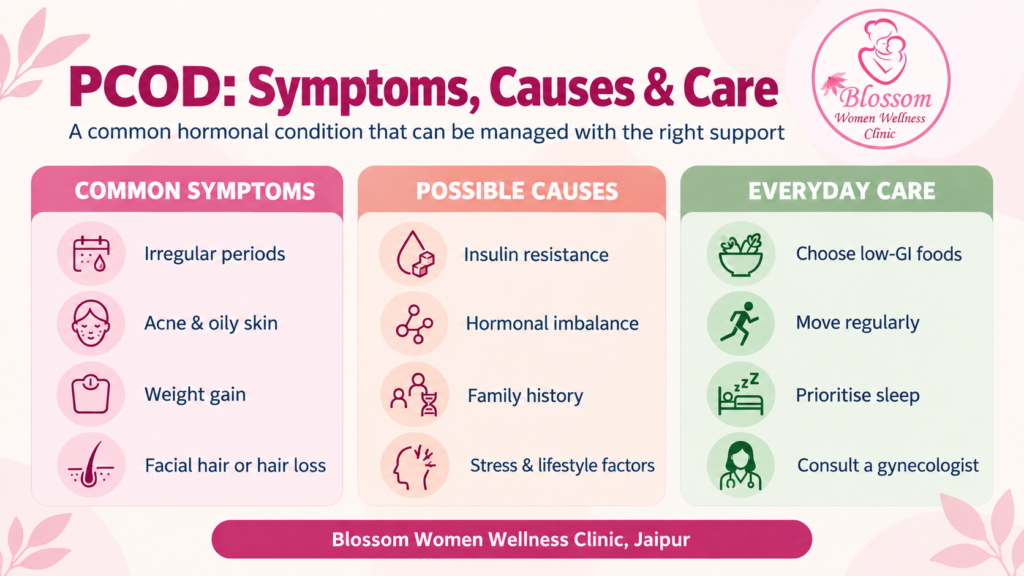
For PCOS, weight-related and stress-related irregularity, lifestyle is the foundation: steady meals (a low-GI pattern works best), 150 minutes a week of movement, seven to eight hours of sleep, and a concrete stress habit. Women asking how to get regular periods naturally are usually asking the right question, natural regulation works precisely when the cause is metabolic or stress-driven, and it takes two to three honest months to show.
Medicines, matched to the cause
- Thyroid tablets restore cycles once levels are normalised
- Metformin improves insulin handling in PCOS and often restores ovulation
- Cyclic progesterone, a short course each month, brings predictable cycles and protects the uterine lining
- The 21-day pill for irregular periods: combined oral contraceptives (21 hormone days, 7 tablet-free days) regulate cycles reliably and are commonly used in PCOS
- Iron if heavy bleeding has caused anaemia, treating the anaemia is part of treating the periods
What tablets for irregular periods are not for
Two cautions we give every patient. First, the “period-inducing” tablets you read about online are prescription progesterone medicines: they work, but only a doctor should give them, only after pregnancy has been ruled out, and for a reason. Second, no fruit, drink, tea or sleeping position brings a period overnight, the internet’s promises about papaya and miracle drinks do not survive contact with physiology. If your period is genuinely late, take a pregnancy test; if it is negative and the wait stretches past three months, come in and let us find the cause.
Can you get pregnant with irregular periods?
Yes, and this deserves its own lines because the fear is so common. Irregular periods usually mean irregular ovulation, not the absence of ovulation. Eggs are still being released some months, which is why pregnancy happens, and why the unpredictability, not infertility, is the real problem. The practical advice:
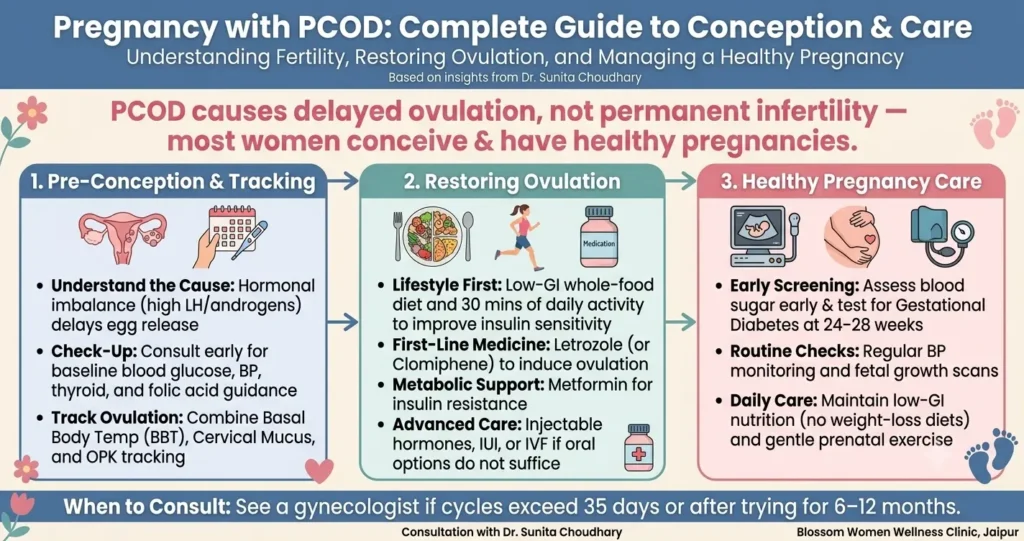
- If you are trying to conceive: seek help after 12 months if you are under 35, or after 6 months if you are over 35 or have known PCOS, do not wait out irregular cycles the usual way. Ovulation induction works very well in PCOS, as we explain in our PCOD pregnancy guide.
- If you are not trying: remember the safe-days caution above, irregular cycles offer no reliable natural contraception.
When to see a gynecologist
Book a consultation if:
- Periods have been irregular for more than three months of tracking
- You miss three or more periods with a negative pregnancy test
- Any red flag from the list above, between-period bleeding, hourly soaking, bleeding after sex, bleeding after menopause
- Your cycles suddenly changed after 40
- You have irregular periods and want to become pregnant, start the conversation early rather than waiting
At the visit, expect a conversation about your tracked pattern, an examination, and usually three simple investigations: blood tests (thyroid, prolactin, and hormones including testosterone), a pelvic ultrasound, and sometimes a pregnancy test as the first step. Most women leave their first appointment with a clear working diagnosis and a plan; many leave with the simple relief of finally having their cycle explained.
The bottom line
Irregular periods are a signal, not a verdict. The causes, PCOS, thyroid, stress, weight, perimenopause, are common, findable with three basic tests, and largely treatable. Track your cycles for three months, rule out pregnancy with any missed period, respect the red flags, and do not self-prescribe tablets to force a period. Then hand your doctor the one thing that makes every diagnosis easier: your data.
Your cycle is one of the most honest reports your body produces. When it changes, do not panic, but do not ignore it either. Read it, and let someone read it with you.
Irregular Periods? Get Answers, Not Guesswork
Bring your tracked cycle pattern to a single consultation, leave with a working diagnosis and a plan, not just a prescription. Chat with us on WhatsApp or book with Dr. Sunita Choudhary at Blossom Women Wellness Clinic, Vaishali Nagar, call +91 9928070006. Same-week appointments are usually available.
Dr. Sunita Choudhary
Sr. Consultant Gynecologist & Obstetrician
Blossom Women Wellness Clinic, Vaishali Nagar | Shalby Multi-Speciality Hospital, Jaipur
This article is general health education, not personalised medical advice. For guidance specific to your case, book a consultation on +91 99280 70006 or message on WhatsApp.